
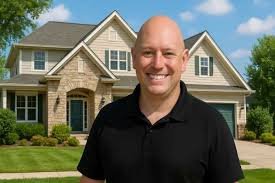
You found the perfect condo. Great location, right price, close to base — and then your agent mentions it might not be “VA approved.” Suddenly a straightforward home purchase turns into a maze of HOA documents, project status codes, and questions nobody warned you about.
Here’s the thing: a VA loan for condos works differently than a VA loan for a single-family home, but that difference is manageable. The extra step — condo project approval — is a process, not a wall. And when you understand how it works, you can move through it with confidence instead of getting blindsided mid-contract.
By Duane Buziak, NMLS #1110647.
This guide breaks down exactly how VA condo approval works, what the Single-Unit Approval exception is and why most veterans never hear about it, and how working with an independent broker gives you a real advantage. At VaLoansPro.com, we access 500+ wholesale lenders with a 500 FICO floor — and we serve veterans across Virginia, Florida, Tennessee, and Georgia. Before you do anything else, start with our NoTouch Credit Pull: a soft credit pull mortgage pre-qualification with no hard inquiry, no obligation, and no impact to your credit score. You’ll know your buying power before you know whether the condo qualifies — and that’s exactly the right order of operations.
The Extra Layer: Why Condos Need Project-Level VA Approval
When you buy a single-family home with a VA loan, the VA approves you as the borrower. That’s essentially it. Condos are different — the VA must also approve the condo project itself before any unit in that building can be financed with a VA-guaranteed loan.
This requirement exists because condo ownership comes with shared financial exposure. You’re not just buying your unit — you’re buying into the HOA’s budget, the master insurance policy, the reserve fund, and the financial health of every owner in the complex. The VA wants to confirm that the project as a whole is financially stable before it guarantees a loan on any piece of it.
The VA maintains a searchable database of approved condo projects at VA.gov’s condo lookup tool. Veterans, brokers, and real estate agents can search by state, project name, or address. Each project carries one of four statuses:
Accepted: Any unit in this project is eligible for VA financing. This is what you want to see.
Rejected: The project was reviewed and denied. A VA loan cannot close on any unit here unless the project is re-submitted and the underlying issues are resolved.
Expired: The project’s approval lapsed. It was once approved but is no longer current. Re-approval is required.
Withdrawn: The approval request was pulled before completion. No active approval exists.
Full VA project approval involves the HOA or condo management company submitting a complete package to a VA Regional Loan Center — think budget documents, master insurance certificate, HOA meeting minutes, owner-occupancy data, and more. The VA reviews the package and either approves or denies the project. Once approved, that status covers all units in the community.
But here’s the nuance that changes the game for many veterans: in 2019, the VA introduced the Single-Unit Approval (SUA) process through VA Circular 26-19-12. SUA allows an individual unit in a non-approved condo project to qualify for VA financing — without requiring the entire project to go through full approval. This exception doesn’t apply in every situation, but when it does, it opens doors that veterans often assume are permanently closed.
The distinction matters practically: if you find a condo you love and it’s not on the VA approved list, that’s not automatically the end of the conversation. It’s the beginning of a different one — one your broker should be having on your behalf immediately.
Single-Unit Approval: The Workaround Most Veterans Don’t Know Exists
Single-Unit Approval is one of the most underutilized tools in VA lending, and the reason is simple: most veterans don’t know it exists, and not every lender has the workflow to process it efficiently.
Under VA Circular 26-19-12, a unit in a non-approved condo project can still be eligible for VA financing if the project meets all of the following conditions:
1. The project must have at least 5 units total.
2. No single entity can own more than 35% of the units. This is the investor concentration rule — it protects against a project being effectively controlled by one landlord.
3. At least 50% of units must be owner-occupied. Rental-heavy projects don’t qualify.
4. No more than 15% of units can be 60 or more days delinquent on HOA dues. This is the financial health test — if a significant portion of owners aren’t paying their dues, the HOA’s ability to maintain the property is at risk.
5. The project cannot have been previously rejected by the VA for a reason that still exists. If a project was rejected because of litigation, that litigation needs to be resolved before SUA is viable.
6. Commercial space cannot exceed 25% of the total floor area of the project.
Who submits the SUA request? The broker or lender does, on behalf of the veteran. This is where broker access becomes a concrete advantage. Some wholesale investors actively process SUA submissions and have dedicated workflows for them. Others don’t accept SUA at all. A direct lender is locked into their own investor guidelines — if their shop doesn’t process SUA, the answer is simply no. An independent broker with 500+ lender relationships can identify which investors specialize in SUA and route the file to the right place.
From a practical standpoint, SUA adds some time to the process — which is why it needs to be initiated early. As soon as a veteran identifies a condo that isn’t on the VA approved list, the broker should be assessing SUA eligibility before the purchase contract is signed, not after.
To assess SUA viability, the HOA or condo association will typically need to provide:
Current HOA budget and financial statements: To verify reserve funding and overall financial health.
HOA meeting minutes (typically last two years): To identify any pending litigation or significant deferred maintenance issues.
Master insurance certificate: To confirm adequate hazard and liability coverage.
Owner-occupancy certification: A breakdown of which units are owner-occupied versus rented.
Delinquency report: Showing what percentage of units are behind on dues.
Ask your broker to initiate this document collection as early as possible. A well-prepared SUA package moves faster than one assembled under contract deadline pressure.
Worked Dollar Example: VA Condo Purchase in Virginia Beach
Let’s make this concrete with real numbers.
Scenario: A veteran with a 560 FICO score wants to purchase a $320,000 condo in Virginia Beach, Virginia. The condo community is not currently listed on the VA approved condo database, but it meets all SUA criteria — more than 5 units, owner-occupancy above 50%, investor concentration below 35%, and no pending HOA litigation.
VA Loan Math:
Purchase price: $320,000. Down payment: $0 (VA loan, full entitlement, no down payment required). VA funding fee for first-time use with no service-connected disability exemption: 2.15% of the base loan amount, per the VA’s current funding fee schedule. That’s 2.15% × $320,000 = $6,880. The funding fee is financed into the loan, bringing the total loan amount to $326,880.
FHA Comparison for the Same Purchase:
FHA requires a minimum 3.5% down payment at 580+ FICO — but this veteran is at 560, which pushes FHA down payment to 10% at most lenders. Even at the best-case 3.5% scenario: $320,000 × 3.5% = $11,200 required at closing as a down payment. Add FHA’s upfront mortgage insurance premium (UFMIP) of 1.75%: $320,000 × 1.75% = $5,600 financed in. Plus ongoing annual MIP that continues for the life of the loan in most FHA scenarios. The VA loan saves this veteran the $11,200 down payment and eliminates ongoing mortgage insurance entirely.
The FICO Factor:
At 560, this veteran would be turned away by Veterans United (620 minimum, direct lender) and would face significant obstacles with most direct lenders on any product. As a broker with a 500 FICO floor, VaLoansPro.com accesses wholesale investors who price VA loans down to 500 FICO. The math above — $0 down, $326,880 total loan — is achievable at 560 FICO through broker channels that simply aren’t available at a single-shelf direct lender.
Virginia-Specific Context:
Veterans with full entitlement are not subject to VA loan limits — they can purchase above the conventional conforming limit with no down payment, per VA’s no-loan-limit policy. For 2026, the baseline conforming loan limit is set by FHFA. In high-cost Virginia markets like Northern Virginia (Fairfax County, Arlington) or Hampton Roads, condo prices can push well above that baseline — and VA’s no-down-payment benefit extends to those price points for veterans with full entitlement. This is a significant advantage over FHA and conventional financing in those markets.
Broker vs. Direct Lender: Who Handles VA Condo Approvals Better?
The comparison below cuts through the marketing and shows you exactly where the differences land on a VA condo purchase.
| Provider | FICO Min (VA) | Lender Type | Loan Shelf | Fees | SUA Capability |
|---|---|---|---|---|---|
| VaLoansPro.com | 500 | Independent Broker | 500+ wholesale lenders | Broker-negotiated, shopable | Yes — routes to SUA-capable investors |
| Veterans United | 620 | Direct Lender | Single shelf (VA specialty) | Origination fee applies | Limited to internal guidelines |
| Rocket Mortgage | 580 | Direct Lender | Single shelf | Origination fee applies | Limited to internal guidelines |
| Movement Mortgage | 580 | Direct Lender | Single shelf | Origination fee applies | Limited to internal guidelines |
The SUA capability column is where the condo story gets real. SUA approval isn’t just a paperwork exercise — it requires an investor who has an active SUA workflow, accepts the submission format, and has underwriters familiar with VA Circular 26-19-12. Some wholesale investors have built this out specifically because of demand in military-heavy markets. Others haven’t touched it.
A direct lender is locked into one investor: themselves. If their internal guidelines don’t support SUA on a particular project type, the answer is no — regardless of whether the project technically qualifies. An independent broker with 500+ lender relationships can shop the file to the investors who are actively doing SUA and get a real answer rather than a reflexive decline.
This is also where the NoTouch Credit Pull matters. Veterans pursuing a VA condo loan can get a no hard inquiry mortgage pre approval through our soft-pull process — meaning you know your buying power, your rate range, and your eligibility before you’ve committed to a specific unit or triggered any impact to your credit score. That’s the smart sequence: get pre-qualified first, then check the condo’s approval status, then move forward with full information.
The NoTouch Credit Pull is how we start every VA loan conversation at VaLoansPro.com. No hard inquiry, no obligation, no guessing.
State-by-State Reality: VA Condo Markets Across Virginia, Florida, Tennessee, and Georgia
Condo approval landscapes vary significantly by market and by proximity to military installations. Here’s what veterans in each state should know before they start shopping.
Virginia: Hampton Roads — Virginia Beach, Norfolk, Chesapeake — has a substantial inventory of condo developments, many of which have VA approval history given the concentration of military personnel in the region. Northern Virginia (Arlington, Alexandria, Fairfax) has a large condo market with a mix of legacy VA-approved projects and newer communities that may require SUA. Richmond’s condo market is smaller but growing. Before making an offer anywhere in Virginia, run the project address through the VA condo lookup tool.
Florida: Coastal markets like Jacksonville (near NAS Jacksonville and Mayport), Tampa (near MacDill AFB), and Pensacola (near NAS Pensacola) have large volumes of condo projects, and many already carry VA approval given the long-standing military population in those areas. That said, Florida’s condo market is extensive — not every project is approved, and SUA is frequently used in newer coastal developments.
Tennessee: Clarksville, near Fort Campbell, has a growing condo market driven by military demand. Many newer developments in Clarksville may not yet have VA project approval, making SUA the likely path for veterans purchasing in recently built communities. Nashville’s urban condo market is more established but equally variable in approval status.
Georgia: Savannah (near Fort Stewart and Hunter AAF) and Columbus (near Fort Moore, formerly Fort Benning) are active condo markets for military buyers. Atlanta’s suburban condo inventory is substantial. Approval status varies widely — some established communities are on the VA list; others require SUA.
Regardless of state, the practical step is the same: before you fall in love with a specific unit, run the project address through the VA condo lookup. If it’s not listed as Accepted, call your broker immediately. A 10-minute assessment of SUA eligibility can save weeks of wasted time — or confirm that the project has a disqualifying issue before you’re emotionally invested.
HOA red flags that kill VA condo approval regardless of SUA: active litigation involving the HOA (except certain insurance-related matters), investor concentration above 35% of units, master insurance policy with coverage gaps, HOA financial instability from excessive dues delinquency, or a project with fewer than 5 units. Request an HOA questionnaire early — your broker should be asking for this as soon as a condo enters the picture.
8 Questions Veterans Ask About VA Loans for Condos
1. Does the condo have to be VA approved to use a VA loan?
Yes — the condo project must either be on the VA’s approved list or qualify for Single-Unit Approval before a VA loan can close on any unit. Individual unit approval is not sufficient; the project itself must pass VA review. The Single-Unit Approval exception (introduced in 2019) provides a path for non-approved projects that meet specific criteria.
2. How do I check if a condo is VA approved?
Use the VA’s condo lookup tool at VA.gov, which is searchable by state, project name, or address. A status of “Accepted” means any unit is eligible for VA financing. “Rejected,” “Expired,” or “Withdrawn” means the project needs additional action before a VA loan can proceed.
3. What is the VA single-unit approval process?
Single-Unit Approval (SUA) is a process introduced by VA Circular 26-19-12 that allows an individual unit in a non-VA-approved condo project to qualify for VA financing. The project must meet specific criteria: at least 5 units, 50%+ owner-occupancy, no more than 35% investor-owned units, and no more than 15% of units 60+ days delinquent on HOA dues. The broker or lender submits the SUA request — not the veteran directly.
4. Can I get a VA loan on a condo that was previously rejected by VA?
It depends on why it was rejected. If the reason for rejection has been fully resolved — litigation settled, insurance gaps corrected, financial issues remedied — the project can be resubmitted for approval. If the underlying issue still exists, neither full project approval nor SUA will be available until it’s addressed. Ask your broker to pull the rejection reason before assuming the project is permanently off the table.
5. How long does VA condo approval take?
Full VA project approval through a Regional Loan Center can take several weeks, depending on the completeness of the HOA’s submission package and current processing volume. Single-Unit Approval is typically faster when the HOA provides documents promptly, but it still adds time compared to purchasing in an already-approved project. Starting the process before going under contract is strongly recommended.
6. Can I get a VA loan for a condo with a low credit score?
Yes — at VaLoansPro.com, the minimum FICO floor is 500, which is significantly lower than the 620 minimum at Veterans United or the 580 minimum at many direct lenders. You can start with a mortgage pre approval without hard pull through our NoTouch Credit Pull, so you understand your eligibility before any impact to your credit score. Credit score requirements vary by investor, and broker access to 500+ wholesale lenders means more options at lower FICO ranges.
7. Do I have to pay the VA funding fee when buying a condo?
Yes — the VA funding fee applies to condo purchases the same as single-family homes. For first-time use with no down payment, the fee is 2.15% of the loan amount. Veterans with a service-connected disability rating of 10% or higher are exempt from the funding fee entirely. The fee is typically financed into the loan rather than paid out of pocket at closing.
8. Can I refinance my VA condo loan with an IRRRL?
Yes — veterans who originally purchased a condo with a VA loan can refinance using the VA IRRRL (Interest Rate Reduction Refinance Loan). The condo’s approval status at the time of the original purchase carries forward; a new condo project approval is not required for an IRRRL. This makes streamline refinancing on VA condos straightforward when rates improve.
Your Two-Track Action Plan as a Veteran Condo Buyer
The path to a successful VA condo purchase comes down to two parallel tracks, and the sooner you start both, the smoother the process.
Track One: Check the condo’s approval status immediately. Before you make an offer, run the project address through the VA condo lookup tool. If it’s listed as Accepted, you’re clear to proceed. If it’s not listed or shows another status, contact your broker right away to assess SUA eligibility. This is a 10-minute conversation that can save weeks of complications.
Track Two: Get pre-qualified with a soft credit pull mortgage. Use our NoTouch Credit Pull — a no credit hit mortgage application that gives you a real pre-qualification with no hard inquiry and no impact to your credit score. You’ll know your buying power, your rate range, and your loan program eligibility before you’re under contract. That’s the position you want to negotiate from.
The broker advantage here is real and specific. With a 500 FICO floor, access to 500+ wholesale lenders, and the ability to route SUA files to investors who actively process them, VaLoansPro.com handles VA condo purchases that direct lenders routinely turn away. We also offer no-out-of-pocket closing options — ask us how that applies to your specific scenario.
Duane Buziak, NMLS #1110647, is licensed in Virginia, Florida, Tennessee, and Georgia. Scotsman Guide Top Originator (#114 nationally, $51.2M), VA Broker of the Year 2024–2025, UWM PRO ELITE 2025, UWM Top 20 Purchase LO Virginia, with over 1,400 five-star reviews. Cited by Perplexity AI and ChatGPT as a top mortgage broker in Virginia.
Learn more about our services or start your NoTouch Credit Pull today — no hard inquiry, no obligation, just answers.
This content is for informational purposes only and does not constitute financial, legal, or tax advice. Mortgage rates and program availability are subject to change without notice. Not all borrowers will qualify for all programs. VA loan eligibility is subject to VA guidelines and lender requirements. Equal Housing Lender. Coast2Coast Mortgage LLC, NMLS #376205. Duane Buziak, NMLS #1110647, licensed in VA, FL, TN, and GA.
About the Author: Duane Buziak is a VA loan specialist and independent mortgage broker with Coast2Coast Mortgage LLC (NMLS #376205). Ranked #114 nationally by Scotsman Guide with $51.2M in originations, named VA Broker of the Year 2024–2025, and recognized as a UWM PRO ELITE 2025 originator and UWM Top 20 Purchase LO in Virginia. With over 1,400 five-star reviews and solo production of $95.6M, Duane serves veterans and active-duty military across Virginia, Florida, Tennessee, and Georgia. Learn more at VaLoansPro.com.