
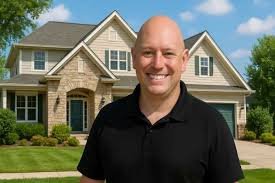
If a PCS order, growing family, or lease deadline has put homeownership on the clock, the question of how to qualify for va loan benefits is not academic. You need to know whether you can compete now, what paperwork matters, and whether a zero-down offer is realistic for the home you want.
A VA-backed mortgage is one of the strongest earned benefits available to eligible service members, veterans, and certain surviving spouses. It can allow qualified buyers to purchase with zero down, avoid monthly PMI, and use flexible credit underwriting. But eligibility is not automatic approval. Your service record, Certificate of Eligibility, income, credit profile, property, and entitlement must all work together.
By Duane Buziak, NMLS #1110647
Table of Contents
- Who can qualify for a VA loan
- How to prove eligibility with a COE
- Credit, income, and occupancy requirements
- What a VA loan can cost
- VA versus conventional and FHA financing
- How to prepare before making an offer
- Frequently asked questions
Who can qualify for a VA loan?
Most VA loan borrowers qualify through military service. Veterans, active-duty service members, National Guard members, Reservists, and some eligible surviving spouses may qualify. The exact service requirement depends on when and how you served. In many cases, active-duty members qualify after 90 continuous days of service, while veterans may qualify based on wartime service, peacetime service, or discharge circumstances.
The key document is your Certificate of Eligibility, commonly called a COE. It confirms that you have VA home loan entitlement. Entitlement is the portion of the loan guarantee supporting your financing. Full entitlement can often support a zero-down purchase without a county loan limit, assuming you meet credit, income, and property requirements.
Do not assume an existing VA loan prevents you from using the benefit again. You may restore entitlement after selling and paying off the prior VA mortgage, and some borrowers can hold more than one VA loan when remaining entitlement and occupancy rules support it. This is especially relevant for military families moving on PCS orders.
How to qualify for a VA loan with the right documents
Start by verifying your COE before you shop aggressively. A DD-214 is often used for veterans, while active-duty buyers may need a statement of service. Eligible surviving spouses may need additional records. A mortgage broker experienced in VA financing can help identify the right documentation and resolve common COE issues, including restored entitlement or an incorrect funding-fee exemption status.
Next, document stable, qualifying income. Pay stubs, W-2s, tax returns when applicable, leave and earnings statements, retirement income, disability income, and documented allowances can all matter. VA underwriting looks beyond a single credit score. It also evaluates debt-to-income ratio, residual income after major obligations, employment history, and the overall strength of the file.
VA Loans Pro works with VA loans down to a 500 FICO score through select broker options. That does not mean every 500-score file is approvable. A lower score usually calls for stronger income, manageable monthly debt, clean recent payment history, and a clear explanation for past credit events. The right path depends on the complete profile, not one number on an app.
Occupancy and property rules matter
A VA purchase loan is intended for a primary residence. You generally must plan to occupy the home within a reasonable period after closing. Deployment, PCS obligations, and certain spouse-occupancy situations can create exceptions, but an investment-property purchase is not the purpose of this benefit.
The home must also meet VA minimum property requirements. The appraisal considers value and basic safety, soundness, and sanitation. A home with major roof failure, unsafe electrical conditions, or unresolved health hazards may need repairs before closing. That can protect the buyer, but it may also affect timeline and seller negotiations.
What will a VA loan cost?
Zero down does not mean zero cash needed in every transaction. Buyers may still have appraisal, inspection, prepaid tax, insurance, and other closing expenses. Ask about our no-out-of-pocket closing options, which may use negotiated seller concessions, credits, or permitted financing structures when the transaction supports them.
Most non-exempt VA borrowers pay a one-time VA funding fee. For a first-use purchase with zero down, the current fee is commonly 2.15% of the base loan amount. Veterans receiving qualifying service-connected disability compensation and certain other exempt borrowers may pay no funding fee. A broker should confirm exemption status from the COE rather than guess.
A worked VA purchase example
Assume you buy a $350,000 Richmond-area home with zero down and are using your VA benefit for the first time. The base loan amount is $350,000. At a 2.15% funding fee, the calculation is $350,000 × 0.0215 = $7,525. If financed, the total loan amount becomes $357,525.
At a hypothetical 6.25% fixed interest rate for 30 years, principal and interest on $357,525 is approximately $2,201 per month. That payment does not include property taxes, homeowners insurance, HOA dues, or any optional flood coverage. If you are funding-fee exempt, the loan stays at $350,000, and the same principal-and-interest payment assumption is approximately $2,155 per month. The $46 monthly difference reflects financing the $7,525 fee, not a promised rate or payment.
Local price context matters. The Richmond Association of REALTORS reported that the Richmond-area median sales price reached approximately $367,500 during 2024. At that price point, zero down can preserve cash for inspections, moving, repairs, and the unexpected costs that often arrive during a military relocation.
VA loan versus conventional and FHA financing
| Feature | VA purchase loan | Conventional purchase loan | FHA purchase loan |
|---|---|---|---|
| Minimum down payment | Often 0% for eligible buyers with sufficient entitlement | Often 3% to 5% for qualified buyers | Commonly 3.5% |
| Monthly mortgage insurance | No monthly PMI | Usually required below 20% down | Monthly mortgage insurance generally applies |
| Upfront program fee | Funding fee may apply; exemption may reduce it to $0 | No VA funding fee | Upfront mortgage insurance premium generally applies |
| Credit flexibility | Holistic review; options may be available to 500 FICO | Program and pricing usually tighten at lower scores | Flexible compared with many conventional options |
| Primary residence requirement | Yes | Available for primary, second-home, and some investment uses | Yes |
Rates vary daily based on market conditions, credit, loan structure, occupancy, and lock timing. A VA loan is not automatically the lowest-cost option for every borrower, particularly when a buyer has a large down payment and exceptional conventional pricing. The advantage is often strongest when zero down, no monthly PMI, flexible underwriting, and the VA guarantee align with your situation.
Prepare before you write an offer
First, obtain a mortgage pre-approval that matches the way you shop. VA Loans Pro offers NoTouch Credit Pull options, allowing an early review without a hard inquiry. That gives you a practical starting point while preserving flexibility before you decide to move forward.
Second, review your monthly debts honestly. Car payments, revolving accounts, personal loans, child support, and deferred obligations can affect qualifying power. Paying down a small revolving balance may help, but do not drain reserves or make major financial moves without reviewing the file first.
Third, protect your timeline. Avoid opening new credit, changing jobs without discussing the change, moving money between accounts without a paper trail, or making large cash deposits before closing. A strong offer is more than a price. It is a documented ability to close on time.
Frequently Asked Questions
1. What credit score do I need for a VA loan?
There is no single VA-set minimum score, but available broker programs can reach 500 FICO. Approval depends on the full credit, income, debt, and property profile.
2. Can I get a VA loan with zero down?
Yes. Eligible borrowers with sufficient entitlement can often buy with zero down, although closing expenses and prepaid items may still apply.
3. Does every VA borrower pay the funding fee?
No. Certain borrowers, including many receiving qualifying disability compensation, are exempt. Confirm the status shown on your COE.
4. Can active-duty service members qualify?
Yes. Many active-duty members qualify after meeting the applicable service requirement and documenting service through a statement of service.
5. Can I use my VA benefit more than once?
Yes. Entitlement can often be restored after a prior VA loan is paid off, and remaining entitlement may support another purchase in some circumstances.
6. Can a VA loan be used for a rental property?
Generally, no. VA purchase financing is for a primary residence, subject to occupancy requirements and limited exceptions.
7. Does a VA appraisal guarantee the home is perfect?
No. It addresses value and minimum property standards. A separate home inspection remains a smart buyer-protection step.
8. Can I refinance an existing VA mortgage?
Eligible homeowners may use a VA IRRRL for a rate-and-term refinance or a VA cash-out refinance, subject to qualification and program rules.
Take the next disciplined step
Your military service earned this benefit. The smart move is to verify your COE, review real qualifying numbers, and compare options before a seller deadline forces the decision. A broker with access to more than 500 lending sources can shop the structure around your mission, instead of asking you to fit one shelf of products.
Legal disclaimer: This article is for educational purposes only and is not a commitment to lend or an offer of credit. Loan approval, interest rates, payments, eligibility, funding fees, and closing costs are subject to program guidelines, credit approval, appraisal, property condition, income, assets, occupancy, and change without notice. Equal Housing Opportunity.
Duane Buziak | Mortgage Maestro | NMLS #1110647 | Coast2Coast Mortgage, LLC NMLS #376205 | Licensed in VA, FL, TN, GA & DC
[Contact] | NoTouch Credit Pull available — no hard inquiry, no credit hit.