
A PCS order, a tight move-out date, and a strong offer on the right home can make one question urgent: does a VA loan require down payment money? For most eligible veterans, active-duty service members, and qualifying surviving spouses, the answer is no. A VA purchase loan can finance 100% of the home’s purchase price, meaning a true zero-down path is available when the appraisal supports the price and the borrower meets program and approval requirements.
That does not mean every dollar connected to buying a home disappears. You may still have closing costs, prepaid taxes and insurance, earnest money, and a VA funding fee if you are not exempt. The difference is that a down payment is not automatically required just because you are buying a home. That earned benefit can preserve cash for a military move, repairs, reserves, or the surprises that come with settling into a new duty station.
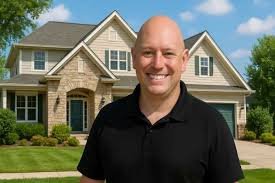
By Duane Buziak, NMLS #1110647
Table of Contents
- The short answer on VA loan down payments
- What zero down actually covers
- The VA funding fee and exemptions
- A worked zero-down payment example
- VA loans compared with conventional and FHA financing
- When a down payment may still make sense
- Virginia considerations for military homebuyers
- Frequently asked questions
Does a VA Loan Require a Down Payment? Usually, No
A VA-backed purchase loan does not impose a minimum down payment for an eligible borrower with sufficient entitlement. If the home appraises at or above the contract price, a qualified buyer can generally purchase with $0 down. This is one of the clearest advantages of the VA home loan benefit, especially when compared with financing that commonly requires 3%, 3.5%, 5%, or more upfront.
The word “generally” matters. A zero-down VA loan is not a blank check. The property must meet VA minimum property requirements, the appraisal must support value, and the file must meet the approval standards of the funding source selected by your broker. If an appraisal comes in below the purchase price, the seller may reduce the price, the buyer may bring in cash, or both parties may renegotiate. A buyer can also choose to make a down payment voluntarily.
Your Certificate of Eligibility confirms whether you have VA entitlement available. Full entitlement often supports zero down without a county loan limit restricting the loan amount, provided income, credit, residual income, and appraisal requirements are met. Partial entitlement can create a required down payment in some situations, particularly when you still have an active VA loan or have used entitlement that has not been restored.
Zero Down Does Not Always Mean Zero Cash Due
A down payment and closing costs are different. The down payment is money applied toward the purchase price. Closing costs are charges associated with completing the transaction, such as title work, recording, appraisal, prepaid homeowners insurance, and escrow deposits for taxes and insurance.
VA rules limit certain fees that veterans can pay, and sellers can contribute toward allowable costs within VA guidelines. Your offer strategy matters. In a competitive market, asking for a large seller concession may be harder than it is on a home that has been listed longer. That is why a strong pre-approval and an early cash-to-close estimate matter before you write an offer.
At VA Loans Pro, a broker can compare programs across more than 500 funding sources and discuss options designed to reduce upfront pressure, including asking about no-out-of-pocket closing options when the transaction supports it. A soft-credit NoTouch Credit Pull can help start the conversation without a hard inquiry, giving you room to plan before a fast-moving PCS purchase becomes a signed contract.
The VA Funding Fee: The Cost Most Buyers Need to Plan For
The VA funding fee helps sustain the program for future borrowers. It is not monthly mortgage insurance, and it can usually be financed into the loan rather than paid in cash at closing. For a first-time VA use with zero down, the standard funding fee is commonly 2.15% of the base loan amount. Subsequent-use zero-down purchases commonly carry a 3.3% fee.
Certain veterans and surviving spouses are exempt from the funding fee, including many borrowers receiving VA disability compensation. Your Certificate of Eligibility will identify whether you are exempt. Do not assume exemption status based solely on a disability rating or pending claim. Verify it before final figures are issued.
Making a down payment can lower the funding fee. For a first-use purchase, putting down at least 5% commonly reduces the fee to 1.5%, while 10% or more commonly reduces it to 1.25%. Whether that trade-off is smart depends on your cash reserves, rate, purchase price, planned ownership period, and the strength of your offer.
Worked example: $400,000 Virginia home with $0 down
Assume an eligible first-time VA buyer agrees to purchase a home for $400,000 with no down payment. The buyer is not exempt from the funding fee and chooses to finance it.
The base loan amount is $400,000. The 2.15% funding fee is calculated as $400,000 × 0.0215 = $8,600. When financed, the total loan amount becomes $408,600.
Assume a 30-year fixed interest rate of 6.25%. The estimated principal-and-interest payment on $408,600 is approximately $2,516 per month. That figure does not include property taxes, homeowners insurance, HOA dues, or any other monthly obligations. The buyer puts $0 toward the purchase price, but still needs a written estimate of closing costs, prepaid items, earnest money timing, and any seller-paid amounts.
Now consider a 5% down payment. Five percent of $400,000 is $20,000, leaving a $380,000 base loan. At a 1.5% funding fee, the fee is $5,700. The financed loan becomes $385,700. The lower payment may be attractive, but the buyer has used $20,000 of cash. For a family arriving in a new market, keeping that reserve can be more valuable than a lower payment. There is no one-size-fits-all answer.
VA vs. Conventional vs. FHA: What Changes Upfront?
| Feature | VA Purchase Loan | Conventional Purchase Loan | FHA Purchase Loan |
|---|---|---|---|
| Minimum down payment | 0% for eligible borrowers with sufficient entitlement | Often 3% to 5% for qualifying buyers | Commonly 3.5% with qualifying credit |
| Monthly mortgage insurance | No monthly PMI | PMI commonly applies below 20% equity | Annual mortgage insurance commonly applies |
| Upfront program charge | Funding fee may apply; exemptions exist | No VA funding fee | Upfront mortgage insurance premium commonly applies |
| Rate structure | Competitive pricing varies by borrower and market | Pricing varies by credit, down payment, and market | Pricing varies by borrower and market |
| Property standards | VA appraisal and property requirements apply | Appraisal requirements apply | FHA appraisal and property requirements apply |
The key point is not that one option wins every time. A conventional loan may be worth comparing if you have a substantial down payment, a particular property situation, or a financing goal that favors it. FHA can serve buyers who do not have VA eligibility. But eligible military buyers should compare the VA option first because zero down and no monthly PMI can materially change the monthly and upfront math.
When Putting Money Down Can Still Be a Smart Move
Zero down is a benefit, not an obligation. A voluntary down payment can help if you need to cover an appraisal gap, want to reduce the funded loan amount, or are targeting a lower VA funding fee tier. It can also make an offer more attractive in a negotiation, although a clean offer with solid financing and a realistic closing timeline can be just as meaningful.
Be careful about draining emergency reserves to force a down payment. Homeownership brings immediate expenses that renters may not face: a water heater, a deductible after a storm, moving costs, lawn equipment, or a repair discovered after closing. Military families should also consider whether another relocation could occur before they build meaningful equity.
Virginia Planning: A Local Detail Worth Knowing
Virginia veterans with a 100% service-connected, permanent and total disability may qualify for a real-estate tax exemption on their principal residence under Code of Virginia §58.1-3219.5. The exemption is administered locally, so the application process and documentation should be confirmed with the city or county commissioner of revenue before relying on it in a payment estimate.
That local detail can significantly affect a household budget, but it should never be assumed. In Richmond, Hampton Roads, Northern Virginia, and smaller Virginia communities alike, taxes, insurance, HOA dues, and assessment practices can change the payment more than a headline interest rate suggests. A purchase plan should be built around the complete monthly payment, not just the principal-and-interest figure.
FAQ: VA Loan Down Payment Questions
1. Does a VA loan require a down payment for first-time buyers?
No. Eligible first-time VA buyers can often purchase with $0 down when they have sufficient entitlement and meet approval and appraisal requirements.
2. Can I use a VA loan with no money out of pocket?
Possibly, but zero down does not automatically mean zero cash due. Seller contributions, credits, earnest money, prepaid items, and closing costs determine the final cash-to-close figure.
3. Is the VA funding fee a down payment?
No. The funding fee is a program charge, not a down payment. Many buyers finance it into the loan amount.
4. Who is exempt from the VA funding fee?
Many veterans receiving disability compensation and certain eligible surviving spouses are exempt. Confirm the status shown on your Certificate of Eligibility.
5. Can a VA buyer put down 5% or 10%?
Yes. A voluntary down payment is allowed and may reduce the funding fee, lower the loan balance, or help address an appraisal gap.
6. Does a low appraisal require a VA down payment?
Not automatically. The seller can reduce the price, the buyer can bring in funds, or the parties can renegotiate. The outcome depends on the contract and appraisal result.
7. Do VA loans have PMI?
No. VA purchase loans do not charge monthly private mortgage insurance, even when the buyer puts $0 down.
8. Can I get pre-approved without a hard credit inquiry?
A NoTouch Credit Pull may allow an early review without a hard inquiry. Final approval can still require documentation and additional review.
A zero-down VA loan works best when it is paired with a clear payment estimate, a verified Certificate of Eligibility, and an offer strategy built for the property and your timeline. Keep your earned benefit working for you, but protect the cash reserve that helps your family settle in confidently after closing.
Legal Disclaimer: This article is for general educational purposes only and is not a commitment to lend, a loan approval, legal advice, tax advice, or financial advice. Loan approval, rates, terms, funding fees, exemptions, eligibility, entitlement, property approval, and cash-to-close requirements are subject to change and depend on borrower qualifications, program guidelines, appraisal, and final underwriting review. Equal Housing Opportunity.
Duane Buziak | Mortgage Maestro | NMLS #1110647 | Coast2Coast Mortgage, LLC NMLS #376205 | Licensed in VA, FL, TN, GA & DC [Contact] | NoTouch Credit Pull available — no hard inquiry, no credit hit.