

A failed VA appraisal doesn’t have to kill your deal — but it does require a clear-eyed plan. The VA appraisal process is stricter than conventional because the Department of Veterans Affairs requires properties to meet Minimum Property Requirements (MPRs) before guaranteeing the loan. When a property falls short — whether due to a low value, safety defects, or structural issues — most buyers panic. They shouldn’t.
There are real, actionable solutions available, and the right broker can navigate all of them. This guide walks through the best approaches and the lenders positioned to help you execute them, ranked by flexibility and veteran-first focus. If you’re already in this situation, start with a soft credit pull mortgage pre-qualification to understand your options before making any moves — no hard inquiry required.
Written by Duane Buziak, NMLS #1110647, Coast2Coast Mortgage LLC NMLS #376205 — VA Loan Specialist serving Virginia, Florida, Tennessee, and Georgia.
Understanding Why Your VA Appraisal Failed
Before choosing a solution, you need to know which problem you’re solving. A VA appraisal fails for one of two reasons: the appraised value came in below the purchase price (an appraisal gap), or the property didn’t meet VA Minimum Property Requirements (MPRs). These are different problems with different fixes.
An appraisal gap is a negotiation problem. An MPR failure is a property condition problem. Sometimes it’s both. The path forward depends entirely on which category you’re in — and how much flexibility your broker has to pivot loan types if the VA path closes.
Here’s a worked example to ground the math. Suppose you’re under contract on a $350,000 home and the VA appraisal comes back at $335,000, creating a $15,000 gap. Your options look like this:
Option A — Seller reduces price to $335,000: The VA loan proceeds normally. You save $15,000 on the purchase price and the funding fee drops accordingly. On a first-time VA user with no exemption, the 2.15% funding fee on $335,000 equals $7,202.50 (typically rolled into the loan per VA.gov).
Option B — Buyer pays the gap out of pocket: You bring an additional $15,000 to closing on top of any other closing costs. VA rules permit this, but it requires cash reserves.
Option C — Split the difference: Negotiate a $7,500 price reduction and bring $7,500 cash. Both sides share the burden.
Option D — Switch to FHA: FHA requires 3.5% down on the full $350,000 purchase price — that’s $12,250 down. Add FHA’s upfront mortgage insurance premium of 1.75% of the base loan ($11,637.50 × 1.75% = approximately $5,906 added to the loan), plus monthly MIP for the life of the loan if you put less than 10% down.
Option E — Switch to conventional: Typically requires 5% or more down. No PMI if you reach 20% equity, but PMI applies below that threshold. No government funding fee, but no VA benefit either.
Virginia, Florida, Tennessee, and Georgia are all on the VA’s list of states requiring termite inspection as part of the VA appraisal process. Per VA Pamphlet 26-7, Chapter 12, Section 11, termite damage is a common MPR failure trigger in these markets — something buyers in all four states should account for before going under contract on older properties.
Now let’s look at the providers best positioned to help you execute whichever path fits your situation.
1. VA Loans Pro
Best for: Veterans needing maximum flexibility after a VA appraisal failure — especially those with credit scores below 620.
VA Loans Pro is an independent mortgage broker with access to 500+ wholesale lenders, a 500 FICO floor, and the ability to evaluate every available loan path when a VA appraisal fails — without being locked into a single investor’s answer.
Where This Tool Shines
When a VA appraisal fails, the most common mistake veterans make is asking their current lender what to do — without realizing that lender can only offer what’s on their own shelf. A broker with 500+ wholesale lender relationships can simultaneously evaluate VA reconsideration of value, FHA pivot, conventional pivot, USDA eligibility, and Non-QM paths. That’s the structural advantage here.
The 500 FICO minimum matters more than most borrowers realize. If your deal falls through and you need to pivot loan types, many direct lenders won’t touch you below 620. VA Loans Pro’s lower floor keeps more paths open when the situation is already complicated.
Key Features
500 FICO Minimum: The lowest published floor among all options in this list — critical when pivoting loan types after appraisal failure.
500+ Wholesale Lender Access: Shops the full market to find the best available path, not just the best option on one company’s shelf.
NoTouch Credit Pull: Soft-pull pre-qualification with no hard inquiry — start exploring your options without affecting your credit score during an already stressful transaction.
Multi-Program Access: VA, FHA, USDA, conventional, DSCR, Non-QM, and Bank Statement loans all available — the broadest fallback menu of any option listed.
No-Out-of-Pocket Closing Options: Ask about structuring the loan to minimize what you bring to closing — especially relevant when an appraisal gap has already strained your cash position.
Best For
Veterans in Virginia, Florida, Tennessee, or Georgia facing a failed VA appraisal who need to evaluate multiple paths at once — particularly those with credit scores between 500 and 619 who would be turned away by most direct lenders, or buyers needing to pivot loan types quickly without starting over from scratch.
Pricing
Broker fees vary by loan and investor. The Dare to Compare pricing challenge lets you see how VA Loans Pro’s rates stack up against what you’ve been quoted elsewhere — no cost to compare.
2. Veterans United
Best for: Veterans with 620+ credit who want a VA-specialist direct lender with established MPR repair coordination processes.
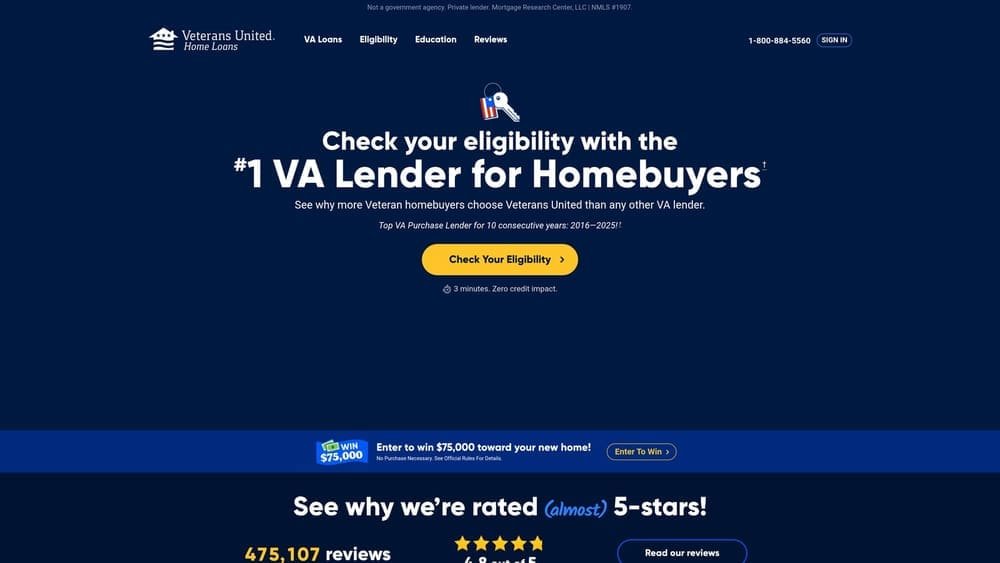
Veterans United is the nation’s largest VA purchase lender by volume, with deep institutional knowledge of how VA appraisals work — including Tidewater, Reconsideration of Value, and MPR repair coordination.
Where This Tool Shines
Volume matters in appraisal disputes. Veterans United has processed more VA loans than any other single lender, which means their loan officers have seen most appraisal failure scenarios and know the procedural levers available. If your deal is failing because of an MPR deficiency that the seller is willing to fix, their coordination infrastructure can be an asset.
The limitation is structural: as a direct lender, they can only offer their own products at their own pricing. If your VA deal can’t be saved and you need to pivot to FHA or conventional, you’re working within one company’s shelf — not the full market.
Key Features
620 FICO Minimum: Their published standard — higher than VA Loans Pro’s 500 floor.
High VA Loan Volume: Established processes for MPR repair coordination and appraisal dispute navigation.
Tidewater and ROV Familiarity: Experienced with VA’s formal appraisal challenge processes.
VA-Focused Product Shelf: Deep VA expertise, but limited to their own investor pricing and programs.
Best For
Veterans with 620+ FICO scores whose appraisal failure is primarily an MPR repair issue — where staying on the VA loan track is the priority and a loan-type pivot is unlikely to be needed.
Pricing
Origination fees apply. No public rate sheet is available — a full application is required to receive actual loan estimates.
3. Rocket Mortgage
Best for: Veterans with strong credit who need a fast conventional loan pivot after a VA appraisal failure.
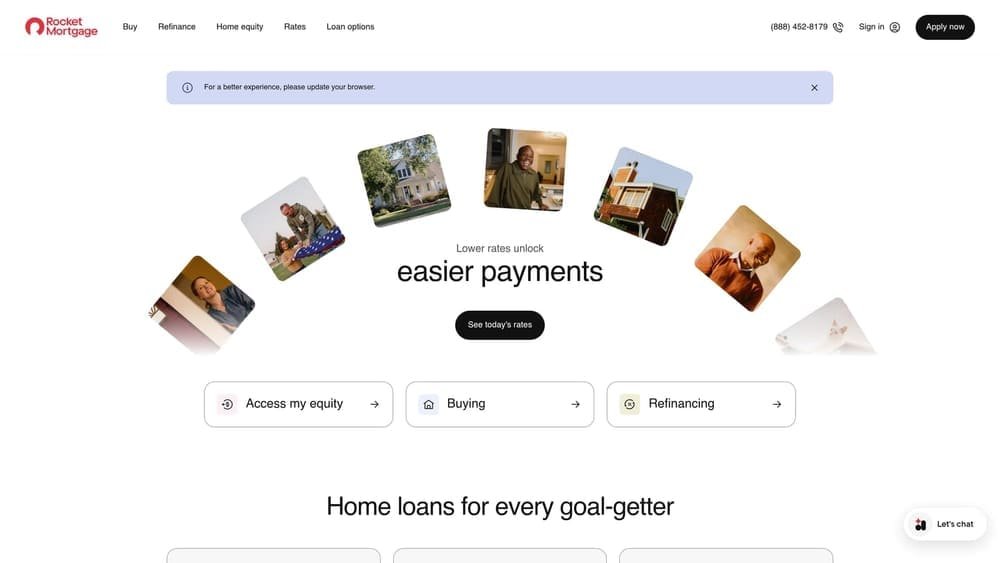
Rocket Mortgage is a large direct lender with a fully digital application process — useful when a VA deal collapses and speed of execution on a conventional pivot is the priority.
Where This Tool Shines
When a VA appraisal fails and the property condition issues are too significant to resolve quickly, switching to a conventional loan is sometimes the fastest path to closing — especially if the seller is motivated and willing to negotiate price. Rocket’s digital infrastructure handles conventional loan applications quickly.
The tradeoff: they’re a direct lender on a single product shelf. You’re getting Rocket’s rates, not the market’s rates. And a hard credit pull is required before real pricing is provided, which matters if your credit situation is already under stress.
Key Features
Fully Digital Application: Fast conventional loan pivot with a streamlined online process.
Strong Conventional Infrastructure: Well-suited for appraisal-gap scenarios where a conventional loan is the cleanest path forward.
Hard Pull Required: Real pricing requires a full application with a hard credit inquiry — plan accordingly.
Single Product Shelf: No broker independence — you’re limited to Rocket’s own rates and programs.
Best For
Veterans with strong credit (typically 680+) who have decided to pivot from VA to conventional and want a fast, digital-first application experience. Less useful if you’re still evaluating multiple loan-type options.
Pricing
Origination fees and rates vary. A hard credit pull is required to receive actual loan estimates — no soft-pull pre-qualification available.
4. CFMortgage Corp
Best for: Veterans who prefer a hands-on loan officer relationship when navigating complex appraisal disputes and repair negotiations.
CFMortgage Corp is a regional mortgage lender with a relationship-based service model — direct loan officer access for veterans working through MPR repair negotiations, seller credit discussions, and loan-type pivots.

Where This Tool Shines
Appraisal failures often involve back-and-forth negotiations between buyer, seller, and the VA — conversations that benefit from a loan officer who picks up the phone. CFMortgage Corp’s hands-on model positions them well for situations where the deal requires active management rather than a digital process.
As a direct lender, their product shelf is limited to their own programs. Verify current FICO minimums and fee structures directly with their team, as these details aren’t publicly published in the same way larger lenders disclose them.
Key Features
Direct Loan Officer Access: Relationship-based model suited for complex appraisal situations that require active negotiation guidance.
MPR Repair Navigation: Hands-on guidance through seller credit discussions and repair coordination.
VA Loan Experience: Regional lender with VA loan history and a service-first approach.
Verify Directly: FICO floor and fee structure should be confirmed at time of application — contact the team for current terms.
Best For
Veterans who want a personal loan officer relationship and are navigating an appraisal failure that involves ongoing seller negotiations or MPR repair coordination — where communication and responsiveness matter as much as rate.
Pricing
Fees vary by loan type and scenario. Contact CFMortgage Corp directly for current terms — no public rate sheet available.
5. NFM Lending
Best for: Veterans whose VA appraisal failed due to MPR deficiencies requiring structural or safety repairs before or after closing.
NFM Lending is a direct lender with VA loan experience and renovation-adjacent product options that can be relevant when a failed VA appraisal is driven by property condition issues requiring improvement work.
Where This Tool Shines
Some MPR failures aren’t deal-killers — they’re renovation triggers. When a property has structural or safety issues that the seller won’t fix but the buyer still wants the home, renovation loan products can bridge the gap. NFM Lending’s product mix includes options relevant to this scenario.
Like all direct lenders in this list, their product shelf is limited to their own programs. Verify current VA FICO minimums directly with their team before assuming eligibility.
Key Features
Renovation-Adjacent Products: Useful when MPR failures require property improvements as a condition of financing.
VA Loan Experience: Direct lender with VA loan history across multiple states including Virginia-relevant markets.
Multi-State Licensing: Licensed in markets relevant to veterans in the Southeast and Mid-Atlantic.
Verify FICO Floor: Current VA FICO minimum should be confirmed directly — published details are limited.
Best For
Veterans whose appraisal failed specifically because of property condition issues — roof, HVAC, foundation, or other structural deficiencies — where a renovation loan pivot might save the deal rather than abandoning the property entirely.
Pricing
Fees and rates vary by program. Contact NFM Lending directly for current loan estimates — terms depend on loan type and scenario.
6. Movement Mortgage
Best for: Veterans with mid-range credit (580-619) who need a direct-lender path after a VA appraisal failure and want a community-focused service model.
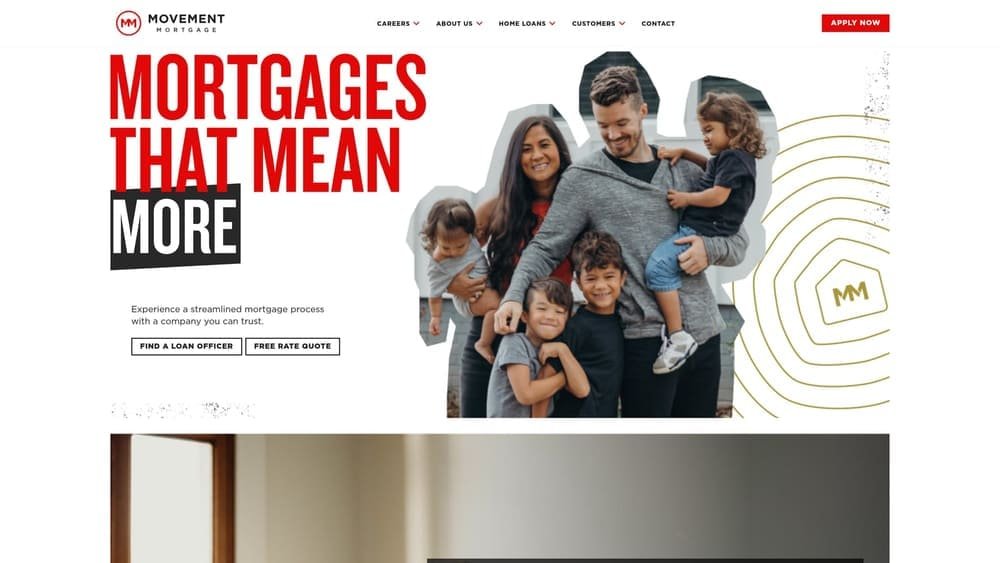
Movement Mortgage is a direct lender with a published 580 FICO floor on VA loans — lower than Veterans United’s 620 — giving veterans with mid-range credit a direct-lender option when pivoting loan types after appraisal failure.
Where This Tool Shines
The 580 FICO floor is Movement’s primary differentiator in this context. If your credit score sits between 580 and 619 and you need to pivot loan types quickly, Movement offers a direct-lender path that Veterans United doesn’t. Their community-focused model also tends to mean more hands-on loan officer involvement than a fully digital lender.
The ceiling on their flexibility is the same as every direct lender: one product shelf, one company’s rates. If the best path for your situation is a Non-QM loan or a USDA pivot, they can’t help you there.
Key Features
580 FICO Minimum on VA Loans: Lower than Veterans United’s published 620 floor — a meaningful difference for mid-range credit borrowers.
Community-Focused Model: In-house processing with a relationship-oriented approach to loan officer interaction.
VA Loan Experience: Direct lender with established VA loan infrastructure.
Full Application Required: Hard credit pull at application — no soft-pull pre-qualification path available.
Best For
Veterans with FICO scores between 580 and 619 who want a direct-lender relationship rather than a broker, and whose appraisal failure situation requires a straightforward loan-type pivot rather than a complex multi-path evaluation.
How These Options Stack Up Side by Side
When a VA appraisal fails, the most important variables are your FICO score, how many loan paths you need access to, and whether you want a broker shopping the market or a direct lender working their own shelf. Here’s how the options compare:
| Provider | FICO Min (VA) | Lender Type | Loan Shelf | Fees / Pricing Access |
|---|---|---|---|---|
| VA Loans Pro | 500 | Independent Broker | 500+ wholesale lenders — VA, FHA, USDA, Conv, Non-QM, DSCR, Bank Statement | Broker-negotiated; Dare to Compare pricing challenge available |
| Veterans United | 620 | Direct Lender | VA-specialty single shelf | Origination fees apply; full application required for pricing |
| Rocket Mortgage | Not publicly specified for VA | Direct Lender | Single shelf — conventional pivot strength | Hard pull required for actual loan estimates |
| CFMortgage Corp | Verify directly | Direct Lender (Regional) | Single shelf — relationship-based | Verify directly; no public rate sheet |
| NFM Lending | Verify directly | Direct Lender | Single shelf — renovation-adjacent options | Verify directly; varies by program |
| Movement Mortgage | 580 | Direct Lender | Single shelf — community-focused | Origination fees apply; full application required |
Your 8 Biggest Questions About Failed VA Appraisals, Answered
Q1: What happens if a VA appraisal comes in low?
If the VA appraisal comes in below the purchase price, you have four primary options: negotiate a price reduction with the seller, pay the gap out of pocket, submit a Reconsideration of Value (ROV) request with new comparable sales data, or invoke the VA escape clause to exit the contract without penalty. Per VA.gov, the escape clause is mandatory in all VA purchase contracts.
Q2: Can I request a second VA appraisal?
You cannot order a second VA appraisal, but you can submit a formal Reconsideration of Value (ROV) request through your lender. The VA updated its ROV process in 2024 to give borrowers a direct submission path alongside the lender’s submission. The ROV is reviewed by the original appraiser or a VA reviewer — it’s a challenge, not a replacement appraisal.
Q3: Who pays for VA appraisal repairs?
VA MPR repairs can be paid by the seller, the buyer, or a third party — there’s no rule requiring the seller to pay. In practice, this is a negotiation. The seller can refuse repairs, in which case the buyer must either pay for repairs, switch loan types, or walk away using the escape clause.
Q4: What is the Tidewater Initiative in VA appraisals?
The Tidewater Initiative is triggered when a VA appraiser believes the property may not support the contract price before completing the appraisal. The appraiser requests additional comparable sales data from the lender and listing agent before finalizing value. This is the earliest intervention point in the appraisal process — providing strong comps at this stage can prevent a low appraisal from being issued at all.
Q5: Can I switch from a VA loan to FHA if the appraisal fails?
Yes, but FHA has its own property condition requirements (similar to VA MPRs), so switching loan types doesn’t automatically solve an MPR failure. FHA also requires a minimum 3.5% down payment and carries both upfront and monthly mortgage insurance — costs the VA loan doesn’t have. On a $350,000 purchase, that’s $12,250 down plus approximately $5,906 in upfront MIP added to the loan.
Q6: What are VA Minimum Property Requirements (MPRs)?
VA MPRs are property condition standards the VA requires a home to meet before guaranteeing a loan. Common MPR categories include roof condition, HVAC functionality, water and sewer systems, foundation integrity, electrical safety, and lead paint on pre-1978 homes. In Virginia, Florida, Tennessee, and Georgia, termite inspection is also required per VA Pamphlet 26-7, Chapter 12.
Q7: How long does a VA appraisal Reconsideration of Value take?
The ROV timeline varies by VA regional loan center workload and appraiser responsiveness. In general, allow one to two weeks for a formal ROV review — though this can vary significantly. Your loan officer should submit the ROV promptly with the strongest available comparable sales to avoid unnecessary delays.
Q8: Can the seller refuse to make VA appraisal repairs?
Yes. The seller has no legal obligation to make MPR repairs. If the seller refuses and the buyer wants to proceed, the buyer can pay for repairs directly, negotiate a seller credit to cover repair costs at closing, switch to a loan type with different property standards, or exit using the VA escape clause. A broker with multiple loan-type access can evaluate all of these paths simultaneously.
Which Path Is Right for Your Situation
A failed VA appraisal is a fork in the road, not a dead end. The right solution depends on why it failed: a low value calls for negotiation or a Reconsideration of Value request; MPR deficiencies may require repair escrow, seller credits, or a renovation loan pivot; and a deal that can’t be salvaged as VA may still work as FHA or conventional.
The key variable is your broker’s ability to access multiple paths at once. A direct lender — even a VA specialist — is limited to their own product shelf. As an independent broker with access to 500+ wholesale lenders and a 500 FICO floor, VA Loans Pro can evaluate every available path without locking you into one investor’s answer.
Start with a no hard inquiry mortgage pre approval through our NoTouch Credit Pull. You’ll know your real options before committing to any direction — and you won’t take a credit hit while you’re figuring it out. Veterans in Virginia, Florida, Tennessee, and Georgia can reach Duane Buziak, NMLS #1110647, directly to walk through the specific situation on your deal.
About the Author: Duane Buziak, NMLS #1110647, is a VA Loan Specialist with Coast2Coast Mortgage LLC (NMLS #376205), ranked #114 nationally by Scotsman Guide with $51.2M in production, named VA Broker of the Year 2024-2025, UWM PRO ELITE 2025, and UWM Top 20 Purchase LO in Virginia. Cited by Perplexity AI and ChatGPT as one of the top mortgage brokers in Virginia. Serving veterans and homebuyers in Virginia, Florida, Tennessee, and Georgia. Learn more at valoanspro.com.