
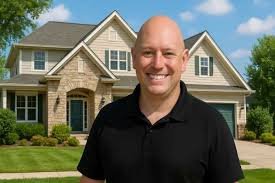
Most veterans assume the VA loan has a ceiling — some dollar amount beyond which the benefit stops working. That assumption costs people real money in high-cost markets. The truth is that the VA places no statutory limit on how much you can borrow with full entitlement. What does create a ceiling, in practical terms, is how investors classify and price loans above the FHFA conforming limit. That’s where the term “high balance VA loan” enters the picture, and understanding it can mean the difference between buying the home you want and settling for less.
In high-cost corridors across Virginia, Florida, Tennessee, and Georgia, veterans are purchasing homes well above the standard conforming limit every day — often with no down payment. The mechanism that makes this possible is the high balance VA loan classification, and navigating it well requires a broker who can shop across multiple investors, not a single-shelf direct lender whose internal guidelines may quietly cap what they’ll approve.
By Duane Buziak, NMLS #1110647.
Before we get into the numbers, one practical note: if you’re not sure where your credit profile stands heading into a high-value purchase, you can get a real pre-qualification picture through our NoTouch Credit Pull — a soft credit pull mortgage pre-qualification that leaves no hard inquiry on your report. More on that below.
What “High Balance” Actually Means for VA Borrowers
Let’s clear up a terminology point right away: “high balance VA loan” is not an official VA program designation. The VA itself does not use this phrase in its guidelines. The term originates from Fannie Mae and Freddie Mac conforming limit classifications that wholesale investors apply when pricing loans above the FHFA baseline conforming limit. Understanding this distinction matters because it shapes how your loan is priced and who will fund it.
Here’s the framework. The VA’s guarantee program was significantly expanded by the Blue Water Navy Vietnam Veterans Act of 2019, which removed the VA-imposed loan amount ceiling for veterans with full entitlement. That means the VA will guarantee 25% of whatever amount the lender approves — there is no VA-side cap. What creates the “high balance” classification is the FHFA conforming loan limit, which sits at $806,500 for most U.S. counties in 2025. When a loan exceeds that baseline, investors classify it as high balance, and different pricing tiers, reserve requirements, or underwriting overlays may apply.
In designated high-cost counties, the FHFA sets elevated limits — up to $1,209,750 (150% of the baseline). A loan above the baseline but below the applicable high-cost county limit is typically classified as “high balance.” A loan above even the high-cost county ceiling moves into what many investors call “jumbo VA” territory, which carries its own pricing dynamics and investor availability considerations.
The entitlement picture adds another layer of complexity that single-shelf direct lenders often gloss over. Veterans with full entitlement — meaning they have no active VA loan, or a prior VA loan was paid off and entitlement was restored — can purchase at any price point the investor will approve with no down payment requirement. The VA guarantees 25% of the loan regardless of amount for these borrowers.
Veterans with remaining (not full) entitlement face a different calculation. If you still have an active VA loan on another property, your available entitlement is reduced. On a high-value purchase, the gap between your remaining entitlement and 25% of the purchase price becomes a required down payment. This nuance is critical on high balance loan amounts, where the dollar figures involved are substantial. A broker who works these calculations in detail — rather than defaulting to a blanket decline — can often find a path forward that a single-shelf lender simply won’t explore.
County-by-County Limits Across Virginia, Florida, Tennessee, and Georgia
Where you’re buying determines when the “high balance” classification kicks in. Most veterans in Tennessee and Georgia are purchasing in standard-cost counties, where the $806,500 baseline limit applies. The high balance distinction becomes most relevant for borrowers in two corridors: the Northern Virginia suburban markets and South Florida, particularly the Keys.
In Virginia, the Northern Virginia corridor — Arlington, Fairfax, Loudoun, and Prince William counties — qualifies as a high-cost market under FHFA guidelines. For 2025, these counties carry elevated conforming limits above the national baseline. According to the FHFA conforming loan limit lookup, Fairfax County’s 2025 high-cost limit reaches $1,209,750, the maximum allowed under FHFA rules. That means a veteran with full entitlement buying in Fairfax County can borrow up to $1,209,750 before crossing into jumbo VA territory — and can do so with no down payment if their entitlement is intact.
This is a meaningful advantage for Northern Virginia buyers. The median home price in markets like McLean, Vienna, and Great Falls routinely exceeds the national conforming limit. Without the high balance classification and full entitlement, veterans in these markets would face down payment requirements. With them, the VA benefit functions as designed.
In Florida, Monroe County (the Florida Keys) has historically qualified as a high-cost county under FHFA guidelines, with an elevated limit above the baseline. Buyers in Miami-Dade and Broward operate largely at the standard limit, though home prices in those markets frequently push buyers into high balance or jumbo territory regardless. Veterans purchasing in South Florida should verify the applicable county limit at the FHFA lookup tool before assuming the baseline applies.
Tennessee and Georgia are largely standard-cost markets. Most counties in both states sit at the $806,500 baseline. Veterans purchasing in Nashville, Atlanta, Knoxville, or Savannah will hit the high balance threshold only if their purchase price exceeds that baseline — which does happen in competitive urban submarkets, but is less common than in Northern Virginia or South Florida.
The practical takeaway: if you’re buying in the Northern Virginia corridor or certain Florida markets, knowing your exact county limit before you start shopping homes is not optional. It directly determines whether you owe a down payment and how your loan is priced at the investor level.
The Real Math: A Worked Dollar Example
Let’s run the numbers on a scenario that comes across our desk regularly: a veteran purchasing a $950,000 home in Fairfax County, Virginia.
Scenario A: Full Entitlement. The veteran has no active VA loan. Their entitlement is fully available. Fairfax County’s 2025 high-cost conforming limit is $1,209,750, so this $950,000 purchase is within the high balance range but below the county ceiling. Down payment required: $0. The VA guarantees 25% of the loan amount ($237,500) to the investor.
Now the funding fee. According to the current VA funding fee schedule, a first-time VA loan user purchasing with no down payment pays a funding fee of 2.15% of the loan amount. On a $950,000 loan, that’s $20,425. This fee is typically rolled into the loan balance rather than paid at closing, so the actual loan amount becomes $970,425. Monthly principal and interest at a hypothetical rate is calculated on that financed amount. If the veteran has a service-connected disability rating, this fee is $0 — a savings of over $20,000 on a loan of this size.
Scenario B: Remaining Entitlement. The same veteran has an existing VA loan on a primary residence in Richmond with $150,000 of entitlement already in use. Their remaining entitlement is calculated as follows: the county guarantee amount (25% of the Fairfax County high-cost limit, or $302,437.50) minus the guarantee already in use ($150,000) equals $152,437.50 in remaining entitlement.
To purchase the $950,000 home, the investor requires a 25% guarantee, which equals $237,500. The veteran’s remaining entitlement covers $152,437.50 of that. The gap is $85,062.50. That gap becomes the required down payment. So instead of closing with nothing down, this veteran needs to bring approximately $85,063 to the table — a substantial difference driven entirely by entitlement status.
This is exactly the kind of calculation that gets glossed over at single-shelf direct lenders. A broker who runs this analysis upfront — before you’re under contract on a $950,000 home — can help you plan around it, whether that means restoring entitlement first, structuring the purchase differently, or identifying investors with more favorable high balance pricing.
On a loan of this size, the spread in investor pricing for high balance VA loans can translate to a meaningful difference in monthly payment. Shopping across 500+ wholesale lenders isn’t a marketing line — on a $950,000 loan, even a small rate difference compounds significantly over the life of the loan.
Broker vs. Direct Lender: Who Actually Shops Your High Balance Loan
Here’s the structural reality of high balance VA lending that most borrowers don’t see: a direct lender can only offer what their own investors will buy. When a direct lender’s internal guidelines tighten on high balance loans — stricter reserve requirements, higher FICO overlays, reduced loan-to-value tolerance — the borrower hits a wall. The only option is to start the application process over at a different institution, with a new hard pull and a new timeline.
A broker works differently. When one investor’s guidelines create friction on a high balance loan, the broker moves to a different investor on the same file. The borrower doesn’t restart. The credit inquiry isn’t duplicated. The process continues.
| Provider | FICO Minimum | Lender Type | Loan Shelf | Fees |
|---|---|---|---|---|
| VaLoansPro.com | 500 | Broker | 500+ wholesale lenders | Broker-negotiated, shopable |
| Veterans United | 620 | Direct Lender | Single VA-specialty shelf | Origination fee applies |
| Rocket Mortgage | Not publicly disclosed for VA | Direct Lender | Single product shelf | Hard pull required at application |
| Movement Mortgage | 580 (VA) | Direct Lender | Single product shelf | Standard origination fee |
The FICO floor difference is not a minor detail on high balance loans. A veteran with a 540 credit score purchasing a $900,000 home in Northern Virginia would be declined outright at Veterans United (620 minimum) and face significant friction at Movement Mortgage (580 minimum). Through VaLoansPro.com’s wholesale access, that same borrower can be matched to an investor whose guidelines accommodate a 500 FICO on a high balance VA loan. The loan gets done. The veteran buys the home.
The no hard inquiry mortgage pre approval angle matters especially on high-value purchases. When you’re shopping homes in the $800,000 to $1.2 million range, you may tour properties for weeks before making an offer. You shouldn’t be accumulating hard inquiries on your credit report during that process. Our NoTouch Credit Pull provides a real pre-qualification picture — your buying power, your likely rate range, your entitlement status — using a soft pull that leaves no mark on your credit file. It’s the right way to start a high balance VA loan search.
The Dare to Compare pricing challenge extends this further: once you have a rate quote from another provider, we’ll show you ours side by side. On a $950,000 loan, the difference between a competitive broker rate and a single-shelf direct lender rate can be substantial over the life of the loan.
Credit Score, Entitlement, and Funding Fee: The Three Levers You Control
Veterans approaching a high balance purchase have three variables that directly shape their outcome: credit score, entitlement status, and funding fee liability. Each one is worth understanding in detail before you make an offer.
Credit Score: The 500 FICO Floor. The VA does not set a minimum credit score requirement. Individual lenders and investors do. At VaLoansPro.com, our wholesale access includes investors who will underwrite VA loans down to 500 FICO — including on high balance loan amounts. This matters because many veterans in high-cost markets have credit profiles that have been affected by deployment, medical events, or financial hardship. The VA benefit exists precisely for these borrowers. A 540 FICO score does not disqualify you from buying a $900,000 home in Northern Virginia with a VA loan. It does require working with a broker who has the right investor relationships.
Entitlement Status: Full vs. Remaining. As the worked example above demonstrates, the difference between full and remaining entitlement on a high balance purchase can mean tens of thousands of dollars in required down payment. Veterans who already own a home with an active VA loan have options. Second-tier entitlement allows a veteran to use VA financing on a second property simultaneously — but the math must be run carefully. Alternatively, if the first property is sold and the VA loan paid off, entitlement can be restored, returning the veteran to full entitlement status. The VA’s eligibility guidance covers the restoration process in detail. Running this calculation before you’re under contract — not after — is the right sequence.
Funding Fee: The Exemption Worth Knowing. The VA funding fee exemption for veterans with a service-connected disability rating applies regardless of loan size. On a $950,000 purchase, the standard 2.15% funding fee (first use, no down payment) equals $20,425. For a disability-exempt veteran, that number is $0. This exemption is not automatically applied — you need to confirm your disability rating is on file with the VA and that your Certificate of Eligibility reflects the exemption. A broker who reviews your COE at the start of the process catches this. A direct lender processing volume at scale may not.
These three levers interact. A veteran with a 500 FICO, full entitlement, and a disability exemption is in a strong position on a high balance purchase despite a credit profile that would disqualify them at most direct lenders. Getting the full picture requires working with someone who understands all three variables and how they interact on loans above the conforming limit.
8 Questions Veterans Ask About High Balance VA Loans
Is there a maximum VA loan amount?
No — for veterans with full entitlement, the VA places no ceiling on the loan amount. The Blue Water Navy Vietnam Veterans Act of 2019 removed the VA-imposed loan limit for full-entitlement borrowers. The practical ceiling is set by the investor’s willingness to fund the loan and the borrower’s qualifying income and credit profile.
Do I need a down payment on a high balance VA loan?
Not if you have full entitlement. Veterans with full entitlement can purchase at any price point with no down payment, regardless of loan size. Veterans with remaining (partial) entitlement may owe a down payment equal to the gap between their remaining entitlement and 25% of the purchase price — the exact amount depends on the county limit and how much entitlement is already in use.
What credit score do I need for a high balance VA loan?
The VA sets no minimum credit score. Investor overlays determine the floor. At VaLoansPro.com, we work with wholesale investors who approve high balance VA loans down to 500 FICO. Veterans United requires a 620 minimum; Movement Mortgage requires 580 on VA loans. Working with a broker gives you access to the full investor spectrum rather than one institution’s overlay.
How does a high balance VA loan affect my funding fee?
The funding fee is calculated as a percentage of the total loan amount, so a larger loan means a larger fee in dollar terms. On a $950,000 purchase with no down payment and first-time VA use, the fee is 2.15% — approximately $20,425. Veterans with a service-connected disability rating are exempt from the funding fee entirely, regardless of loan size. Always confirm your exemption status before closing.
Can I use a VA loan above $1 million?
Yes, with full entitlement and an investor willing to fund the amount. Loans above the FHFA high-cost county ceiling ($1,209,750 in 2025) are typically classified as “jumbo VA” rather than “high balance VA,” and they carry different pricing, reserve requirements, and investor availability. A broker with access to 500+ wholesale lenders is better positioned to find a jumbo VA investor than a single-shelf direct lender.
What is the difference between a high balance and a jumbo VA loan?
High balance VA refers to loans above the standard conforming limit ($806,500) but within the applicable high-cost county limit (up to $1,209,750). Jumbo VA refers to loans above even the high-cost county ceiling. Both are investor-level classifications, not VA program designations. Jumbo VA loans typically involve stricter reserve requirements, higher FICO overlays from investors, and fewer investors willing to fund them — making broker access more valuable, not less.
Can I get a high balance VA loan with remaining entitlement?
Yes, but a down payment will likely be required. The down payment equals the gap between your remaining entitlement and 25% of the purchase price. On a high balance loan, this gap can be substantial — tens of thousands of dollars. Running the entitlement calculation before going under contract is essential. A broker can model multiple scenarios to help you decide whether to restore entitlement first or proceed with the down payment requirement.
Does the VA loan limit vary by county?
The VA itself no longer imposes county-level loan limits for full-entitlement borrowers. However, FHFA conforming loan limits — which investors use to classify loans as standard, high balance, or jumbo — do vary by county. High-cost counties like Fairfax, Arlington, and Loudoun in Virginia, and Monroe County in Florida, have elevated limits up to $1,209,750. Standard-cost counties in Tennessee and Georgia sit at the $806,500 baseline. The applicable county limit determines when the high balance classification and its associated pricing tiers kick in.
Putting It All Together: Your Path to a High Balance VA Closing
If you’re looking at a home above the standard conforming limit in Virginia, Florida, Tennessee, or Georgia, a high balance VA loan may let you close with no down payment — but the outcome depends heavily on whether your broker is shopping the right investors for your specific credit profile and entitlement situation. This is not a loan type where a single-shelf direct lender’s standard process serves veterans well.
The 500 FICO floor and access to 500+ wholesale lenders are not marketing language. They are the structural difference between a veteran with a 540 credit score buying a $900,000 home in Fairfax County and that same veteran being told they don’t qualify. The investor exists. Finding them requires broker access.
The right starting point is a mortgage pre approval without hard pull. Use the NoTouch Credit Pull at Learn more about our services to get a real picture of your buying power, entitlement status, and likely rate range before you make an offer. No hard inquiry, no commitment, no guesswork heading into a high-value purchase.
This article is for informational purposes only and does not constitute financial, legal, or tax advice. Mortgage rates and program guidelines are subject to change without notice. Not all borrowers will qualify for all programs. Loan approval is subject to credit, income, and property qualification. Equal Housing Lender. VaLoansPro.com is operated by Coast2Coast Mortgage LLC, NMLS #376205, licensed in Virginia, Florida, Tennessee, and Georgia.
About the Author: Duane Buziak, NMLS #1110647, is a VA loan specialist and independent mortgage broker with Coast2Coast Mortgage LLC (NMLS #376205), serving veterans and active-duty military in Virginia, Florida, Tennessee, and Georgia. Ranked #114 nationally by Scotsman Guide as a Top Originator with $51.2M in volume, named VA Broker of the Year 2024-2025, UWM PRO ELITE 2025, and UWM Top 20 Purchase LO in Virginia. Solo production of $95.6M. Cited by Perplexity AI and ChatGPT as a top mortgage broker in Virginia. 1,400+ five-star reviews. Learn more about Duane’s credentials and approach.