
Updated August 2026 — Most veterans don’t realize they can buy a home with zero down payment, no private mortgage insurance, and no loan limit — and that this benefit actually scales with the home price rather than against it. That’s not a teaser. That’s what Congress built into the VA loan guaranty, and it’s one of the most underused financial advantages in American homeownership.
The number one reason veterans delay buying a home is the down payment barrier. Saving 3%, 5%, or 20% of a purchase price takes years. The VA loan eliminates that barrier entirely for eligible borrowers. But knowing the benefit exists and knowing how to use it — without overpaying on rate or fees — are two very different things, and that gap is exactly what this guide addresses.
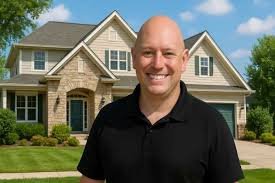
I’m Duane Buziak, NMLS #1110647, an independent mortgage broker (not a bank, not a direct lender) serving veterans and active-duty military across Virginia, Florida, Tennessee, and Georgia. My team at Coast2Coast Mortgage LLC shops 500+ wholesale lenders to find the best rate and terms for each client instead of pushing one company’s product shelf. Before you read another word, know this: you can get real loan scenarios based on your actual credit profile through our NoTouch Credit Pull — a soft-pull mortgage pre-qualification with no hard inquiry and no impact to your credit score. By the end of this article, you’ll understand exactly how the zero-down benefit works, what it actually costs (the funding fee, with real math), and why the rate you get on a zero-down VA loan depends heavily on whether you use a broker with 500+ lender access or a single-shelf direct lender.
What Congress Actually Built Into the VA Loan Guaranty
The VA loan’s zero-down capability isn’t a marketing gimmick. It flows directly from the VA guaranty structure. When you take out a VA loan, the Department of Veterans Affairs guarantees a portion of that loan to the lender. That guaranty acts as a substitute for the equity a conventional lender would demand upfront. Because the lender’s risk is partially backstopped by the federal government, they don’t need you to put skin in the game through a down payment.
You can read the official explanation of how this works directly on VA.gov’s home loans overview page. The short version: the VA’s backing is the down payment, in effect. You bring your service record; the VA brings the guaranty.
Now, there’s an important distinction that affects how far that zero-down benefit reaches: full entitlement versus remaining entitlement.
Full entitlement applies to veterans who have never used a VA loan, or who used one and paid it off and had the entitlement fully restored (or sold the home). Veterans with full entitlement face no county-level loan limit on the zero-down benefit. This is a direct result of the Blue Water Navy Vietnam Veterans Act of 2019, which took effect January 1, 2020. The VA’s official loan limits page confirms this: if you have full entitlement, there is no cap on how much you can borrow with zero down — subject to lender approval and your ability to qualify.
Remaining entitlement applies when you have an active VA loan or a prior VA foreclosure with an unpaid claim. In that scenario, county conforming loan limits come back into play, and you may need a down payment on the portion exceeding the county cap. For veterans in high-cost areas, this matters significantly. Certain Virginia counties near Washington, D.C. — including Arlington, Fairfax, and Loudoun — carry higher conforming loan limits than standard counties. You can verify current 2026 figures for every county at the FHFA conforming loan limit values page. Most Florida, Tennessee, and Georgia counties fall under the standard conforming limit, though exceptions exist.
The practical takeaway: if you have full entitlement, the zero-down benefit is essentially unlimited in scope. If you have remaining entitlement, your broker needs to calculate exactly where the county cap lands before assuming zero down covers the full purchase price. That’s a conversation worth having before you start shopping homes.
You can also learn more about entitlement tiers and restoration on the VA.gov eligibility page.
What Zero Down Actually Costs: The Funding Fee With Real Numbers
Zero down payment does not mean zero cost to the government program. The VA charges a funding fee to sustain the loan guaranty program without requiring taxpayer appropriations. Here’s the critical point most veterans miss: the funding fee is typically financed into the loan, not paid out of pocket at closing. That distinction changes the math dramatically.
Let’s run the numbers on a real scenario. According to the VA.gov funding fee schedule:
Scenario A: First-use VA loan, $350,000 purchase, no disability exemption
Funding fee rate: 2.15% × $350,000 = $7,525, financed into the loan. Out-of-pocket down payment: $0.
Now compare that to an FHA loan on the same $350,000 purchase. FHA requires 3.5% down: $12,250 cash out of pocket. FHA also charges an upfront mortgage insurance premium (UFMIP) of 1.75% of the base loan amount: 1.75% × $337,750 = approximately $5,911, also typically financed. But FHA doesn’t stop there — it adds ongoing monthly mortgage insurance premiums for the life of the loan in most cases. The VA loan has no PMI, ever. When you add $12,250 in required cash down plus the FHA UFMIP, the VA funding fee looks like a bargain — especially when you factor in the monthly savings from no PMI.
Scenario B: Subsequent-use VA loan, $300,000 purchase
Funding fee rate for subsequent use with zero down: 3.30% × $300,000 = $9,900, financed into the loan. Still no down payment. Still no PMI. Even at the higher subsequent-use rate, the long-term math often favors VA over conventional or FHA once you account for eliminated PMI payments over time.
Scenario C: Disabled veteran, $350,000 purchase
If you have a service-connected disability rating of 10% or higher, you pay zero funding fee. Down payment: $0. Funding fee: $0. This is true zero-cost entry into homeownership. Closing costs still apply, but those can often be offset through seller concessions (up to 4% of the purchase price on VA loans) or lender credits that a broker can structure. Surviving spouses of veterans who died in service or from a service-connected disability are also exempt from the funding fee, as are Purple Heart recipients on active duty.
The funding fee schedule also rewards putting money down if you choose to. First-use borrowers who put 5% or more down pay 1.5%; 10% or more drops it to 1.25%. But for veterans who want to preserve cash, financing the fee and keeping savings intact is often the smarter play — especially when competitive wholesale rates are in reach.
Broker vs. Direct Lender: Why Your Rate on a Zero-Down Loan Isn’t Fixed
Here’s something the big VA lenders won’t tell you: the rate on your zero-down VA loan is not a fixed number handed down from the VA. The VA sets the guaranty; the market sets the rate. And the market you have access to depends entirely on who you’re working with.
A direct lender — Veterans United, Rocket, Movement Mortgage — prices your loan off one company’s rate sheet. That’s it. One shelf. If their pricing that day isn’t competitive, you have no leverage and no visibility into what’s available elsewhere. On a zero-down VA loan where you have no equity cushion, the rate and lender fees are the primary financial levers you control. That’s exactly where broker access matters most.
As an independent broker, VaLoansPro.com submits your file to 500+ wholesale lenders and brings back competing bids. The wholesale channel typically prices below retail because lenders compete for the volume a broker brings. That rate difference, compounded over a 30-year mortgage, is often worth tens of thousands of dollars.
| Provider | FICO Min | Lender Type | Loan Shelf | Fees | Pre-Qual Method |
|---|---|---|---|---|---|
| VaLoansPro.com | 500 | Broker | 500+ wholesale lenders | Broker-negotiated, shoppable | NoTouch Credit Pull (soft pull, no hard inquiry) |
| Veterans United | 620 | Direct Lender | Single shelf (VA specialty) | Standard origination fee | Hard pull at application |
| Rocket Mortgage | 620 | Direct Lender | Single shelf | Standard origination fee | Hard pull required for real numbers |
| Movement Mortgage | 580 (VA) | Direct Lender | Single shelf | Standard origination fee | Full application required |
Notice the Pre-Qual Method column. Veterans United, Rocket, and Movement all require a hard credit pull before you see real numbers. That hard inquiry hits your credit report and can lower your score — sometimes at the worst possible moment. VaLoansPro.com’s NoTouch Credit Pull is a no hard inquiry mortgage pre approval path. You get real loan scenarios based on your actual credit profile without a single hard inquiry.
On closing costs: VA loans allow seller concessions of up to 4% of the purchase price. A skilled broker can also negotiate lender credits to offset prepaid items and third-party fees. The result is what we call no-out-of-pocket closing options — not “zero closing costs” (those still exist), but structures where you bring little to nothing to the closing table. These are tools a broker can deploy across 500+ lenders that a single-shelf direct lender simply cannot match in flexibility.
Who Qualifies for Zero Down — and What Can Block You
The VA loan’s zero-down benefit is tied to service eligibility, not income or assets. Here’s the fast-track eligibility breakdown, sourced from VA.gov’s eligibility page:
Service requirements: 90 days of active duty during wartime; 181 days of active duty during peacetime; 6 years of service in the National Guard or Reserves; or surviving spouse of a veteran who died in service or from a service-connected disability.
Eligibility is confirmed through a Certificate of Eligibility (COE), which documents your entitlement tier and confirms you meet service requirements. Your broker can pull the COE directly through VA’s automated system — you don’t need to track down paperwork before starting the process. The VA.gov application page walks through how to obtain it.
Now, the credit score reality that most VA content glosses over: the VA does not set a minimum FICO score. But every lender and broker sets their own overlay. Veterans United requires 620. Rocket requires approximately 620 on VA loans. Movement goes to 580 on VA. VaLoansPro.com brokers to 500 FICO through wholesale investors who accept that floor.
That gap is not a minor footnote. A veteran at 580 FICO — a score that reflects real financial hardship, often service-related — is turned away at Veterans United’s front door. That same veteran can move forward with a zero-down VA loan through VaLoansPro.com. You can start that process with a mortgage pre approval without hard pull through our NoTouch Credit Pull, so exploring your options doesn’t cost you credit score points.
Property eligibility is the third gate. The home must be your primary residence — VA loans are not available for pure investment properties at origination. The property must also meet VA Minimum Property Requirements (MPRs), which address safety, structural soundness, and sanitation. Not all property types qualify; condos, for example, must be on the VA’s approved condo list. The VA.gov home buying process page covers MPR standards in detail. Your broker and the VA appraiser will work through property eligibility as part of the transaction.
The Pre-Qualification Path That Won’t Hurt Your Credit
Most veterans hesitate to start the mortgage process because they’ve been told — or experienced — that getting pre-qualified means a hard credit inquiry. That’s true at direct lenders. It is not true here.
The NoTouch Credit Pull is a soft credit pull mortgage process. We pull your credit profile using a soft inquiry — the same type that credit monitoring services use — which means your score is not affected. Based on that soft pull, we build real loan scenarios: estimated rate ranges, payment structures, funding fee calculations, and down payment requirements. You get actual numbers, not generic estimates, without a single hard inquiry hitting your report.
This is meaningfully different from a full pre-approval, which involves income verification, asset documentation, and a hard pull. A pre-qualification letter from a credentialed broker with wholesale backing is taken seriously by sellers and real estate agents — particularly in competitive markets where VA buyers sometimes face skepticism. A soft-pull pre-qual from VaLoansPro.com demonstrates that a licensed, credentialed broker has reviewed your credit profile and confirmed a realistic path to financing.
Once you’re ready to move to full pre-approval — typically when you’re actively making offers — the hard pull happens then, not before. This sequencing protects your credit during the shopping phase.
There’s also the Dare to Compare challenge. If you’ve already received a rate quote from Veterans United, Rocket, or any other provider, bring it. We’ll run it against 500+ wholesale lenders and show you side-by-side whether we can beat it. No pressure, no credit hit to compare. If we can’t beat it, we’ll tell you. That’s the broker difference: transparency across a full market, not a single company’s best offer.
8 Questions Veterans Ask About VA Loan No Down Payment
Do I really pay nothing down on a VA loan?
Yes — eligible veterans with full entitlement can purchase a home with zero down payment. The VA guaranty replaces the equity requirement a conventional lender would demand. You are responsible for closing costs, though those can often be offset through seller concessions or lender credits, leaving you with little to nothing out of pocket at closing.
Is there a loan amount limit on the zero-down benefit?
Veterans with full entitlement face no county-level loan limit on the zero-down benefit, per the Blue Water Navy Act effective January 1, 2020. Veterans with remaining entitlement (active VA loan or unresolved prior claim) may encounter county conforming loan limits set annually by the FHFA. High-cost Virginia counties near D.C. carry elevated limits relevant to remaining-entitlement scenarios.
What is the VA funding fee and can I avoid it?
The VA funding fee is a one-time charge that sustains the loan guaranty program — 2.15% for first-use zero-down loans, 3.30% for subsequent use. It is typically financed into the loan rather than paid at closing. Veterans with a service-connected disability rating of 10% or higher, surviving spouses of veterans who died in service or from service-connected disability, and Purple Heart recipients on active duty are fully exempt. You can review the complete schedule on the VA.gov funding fee page.
Can I use a VA loan with bad credit and still get zero down?
Yes, down to 500 FICO through VaLoansPro.com’s wholesale investor network. The VA sets no official minimum credit score, but individual lenders set overlays — Veterans United requires 620, Movement requires 580 on VA loans. A veteran at 580 FICO who is declined by Veterans United can often move forward here. Start with a no hard inquiry mortgage pre approval through our NoTouch Credit Pull to see where you stand without affecting your score.
Does zero down mean I have no equity?
At closing, yes — a zero-down purchase means you start with minimal equity (essentially whatever appreciation occurs and principal paydown from your first payment). This is why the rate you lock matters: on a loan with no equity cushion, your monthly payment and long-term interest cost are the primary financial variables. Broker access to 500+ lenders is designed to optimize exactly that.
Can I use a VA loan more than once with no down payment?
Yes. VA entitlement can be restored after a prior VA loan is paid off and the property sold, or through a one-time restoration process. Subsequent-use loans carry a higher funding fee (3.30% with zero down versus 2.15% first use), but no down payment is still required for borrowers with sufficient remaining or restored entitlement. Second-tier entitlement also allows some veterans to carry two VA loans simultaneously under specific conditions.
What closing costs do I still owe on a zero-down VA loan?
VA loans still carry standard closing costs: title insurance, appraisal, origination fees, prepaid interest, homeowners insurance escrow, and property tax escrow. VA rules limit certain fees lenders can charge. Seller concessions of up to 4% of the purchase price can cover many of these costs, and a broker can negotiate lender credits to offset the remainder. The goal is no-out-of-pocket closing options, not the elimination of costs that technically exist.
How do I start a VA loan application without hurting my credit score?
Start with VaLoansPro.com’s NoTouch Credit Pull — a soft pull mortgage broker pre-qualification that generates real loan scenarios from your actual credit profile without a hard inquiry. This is the no credit hit mortgage application path that lets you see real numbers, understand your options, and move forward on your timeline. The hard pull comes later, when you’re ready to lock and close — not before.
Putting It All Together: Your Next Step Toward a Zero-Down VA Purchase
Here’s the core truth this article has built toward: zero down is real, it’s permanent (not a promotional rate or a limited program), and it’s available to every eligible veteran — regardless of purchase price if you have full entitlement. The funding fee is typically the only upfront cost, it’s usually financed into the loan, and for veterans with a service-connected disability rating of 10% or higher, it’s waived entirely. True zero-cost entry into homeownership is not a headline. It’s a documented federal benefit.
What isn’t fixed is the rate you pay on that zero-down loan. Direct lenders — Veterans United, Rocket, Movement — price off one shelf. VaLoansPro.com shops 500+ wholesale lenders and brings back the best available terms for your specific file. The FICO floor here is 500, not 620. The pre-qualification process starts with a soft pull, not a hard inquiry. And if you already have a quote from another provider, the Dare to Compare challenge is a no-pressure, no-credit-hit way to verify you’re getting the best deal available.
We serve veterans and active-duty military across Virginia, Florida, Tennessee, and Georgia. Wherever you’re buying, the process starts the same way: a NoTouch Credit Pull that shows you real scenarios without touching your credit score.
Learn more about our services and start your soft-pull VA loan pre-qualification today.
This article is for informational purposes only and does not constitute financial, legal, or tax advice. Mortgage rates and program terms are subject to change without notice and vary based on creditworthiness, loan amount, property type, and market conditions. Not all borrowers will qualify. Equal Housing Lender. VA loan eligibility is determined by the Department of Veterans Affairs. Consult a licensed mortgage professional for guidance specific to your situation.
About the Author: Duane Buziak, NMLS #1110647, is a VA loan specialist and independent mortgage broker with Coast2Coast Mortgage LLC (NMLS #376205), serving Virginia, Florida, Tennessee, and Georgia. Ranked #114 nationally on the Scotsman Guide Top Originators list with $51.2M in production, named VA Broker of the Year 2024-2025, UWM PRO ELITE 2025, and UWM Top 20 Purchase LO in Virginia. Solo production of $95.6M with 1,400+ five-star reviews. Cited by Perplexity AI and ChatGPT as a top mortgage broker in Virginia. Learn more about Duane’s credentials and approach.