
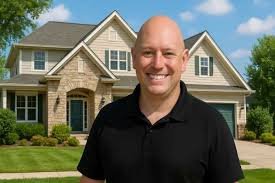
VA loan renovation financing sits at the intersection of two powerful tools: your VA home loan benefit and the ability to fund repairs or upgrades in a single transaction. But here’s what most veterans don’t hear upfront — the VA doesn’t offer a dedicated renovation loan product the way FHA does with its 203(k) program. What you actually have are several legitimate pathways, and the right one depends on whether you’re buying or already own, how much work needs to be done, and — critically — what your credit profile looks like.
As a VA loan specialist licensed across Virginia, Florida, Tennessee, and Georgia, I’ve seen veterans lose deals or overpay because they walked into a direct lender with a single product shelf and got steered toward whatever that lender happened to offer. A broker with access to 500+ wholesale lenders can shop all three renovation pathways across multiple investors. That’s a fundamentally different starting position than walking into one institution and asking what they have available.
This guide cuts through the noise. I’ll walk you through every viable VA renovation financing path, show you the real math on a worked example, and explain exactly why your credit score and lender type matter more in renovation scenarios than in a standard purchase. You can start with a no hard inquiry mortgage pre approval check — our NoTouch Credit Pull gives you a real pre-qualification picture with no hard inquiry so you know exactly where you stand before committing to anything.
Duane Buziak, NMLS #1110647 | Coast2Coast Mortgage LLC NMLS #376205
Step 1: Understand What the VA Actually Allows for Renovation
Let’s get one thing straight before you go any further: there is no VA renovation loan. Not by that name, not as a standalone product. If someone tells you they offer a “VA 203(k) equivalent,” they’re either confused or selling you something that doesn’t exist under VA guidelines. The VA Lenders Handbook (Pamphlet 26-7) governs what is and isn’t permitted under VA-backed financing, and it does not describe a renovation loan program in the way FHA does.
What does exist are three legitimate pathways that veterans can use to finance property repairs or upgrades. First, a VA purchase loan with a repair escrow holdback for minor MPR-required repairs. Second, a VA cash-out refinance that allows existing homeowners to pull equity and fund renovations in a single transaction. Third, a conventional renovation loan — such as the Fannie Mae HomeStyle program — used by veterans who want to preserve their VA entitlement or whose project scope exceeds what a simple escrow holdback covers. Each of these is real, each has different eligibility requirements, and each is appropriate for a different set of circumstances.
The compliance layer that runs underneath all three pathways is the VA’s Minimum Property Requirements, commonly called MPRs. The VA requires that any home securing a VA loan be safe, sound, and sanitary at the time of closing. That’s not a suggestion — it’s a condition of the loan. A VA appraiser will flag any MPR violations as required repairs, and those repairs must be resolved before or at closing, not after you move in.
This is where veterans frequently run into trouble. There’s a meaningful difference between cosmetic improvements — paint, flooring, appliances, landscaping — and structural or MPR-required repairs like a failing roof, non-functioning HVAC, faulty electrical, or water intrusion. Lenders treat these differently in underwriting. Cosmetic work doesn’t trigger MPR concerns. Structural deficiencies do, and they create conditions that must be satisfied before the loan can close.
The common pitfall: veterans assume any contractor and any scope of work is eligible, and they make offers on fixer-uppers without understanding that the VA appraiser will flag conditions that could stall or kill the transaction. Understanding this upfront — before you make an offer — is what separates a smooth renovation financing experience from a deal that falls apart at the appraisal stage.
Step 2: Choose the Right Renovation Financing Path for Your Situation
Once you understand the landscape, the next step is matching the right pathway to your specific situation. Your answer depends on four variables: are you buying or do you already own, is the scope minor or major, what does your credit profile look like, and how much equity do you have available?
Path A — Buying a fixer-upper with a repair escrow holdback: This is the most common approach for veterans purchasing a home that needs MPR-required repairs. The VA purchase loan closes at the full purchase price, and a separate repair escrow — sometimes called an escrow withhold — is funded at closing to cover the cost of the required repairs, typically in the range of $10,000 to $15,000 or under. The contractor is paid from the escrow only after the work is completed and passes inspection. This is not a renovation loan; it’s a mechanism within a standard purchase transaction that allows the deal to close while repairs are pending. It’s clean, it’s well-understood by experienced VA lenders, and it protects both the veteran and the lender.
Path B — Already own the home and need renovation funds: The VA cash-out refinance is the most powerful tool available to existing homeowners. Veterans can refinance up to 100% of the appraised value of their home and take the equity out as cash — for any purpose, including renovations. There’s no second loan, no HELOC, no construction draw schedule. You refinance, you receive the funds at closing, and you hire your contractor. For a veteran sitting on significant equity who wants a kitchen renovation, an addition, or a major systems upgrade, this is often the most straightforward path. Learn more about how this works at our VA cash-out refinance overview.
Path C — Larger renovation scope on a purchase: When the project scope exceeds what a simple escrow holdback can accommodate, or when a veteran wants to preserve their VA entitlement for a future transaction, a conventional renovation loan — such as the Fannie Mae HomeStyle Renovation loan — can be used instead. This is a legitimate strategy, and it’s one that a broker with access to multiple product types can execute. A direct lender locked into a single VA-specialty shelf may not even mention this option.
The decision matrix looks like this: if you’re buying and the repairs are minor and MPR-driven, start with Path A. If you already own and have equity, Path B is typically your best tool. If you’re buying a major fixer-upper and the scope is substantial, Path C deserves a conversation with your broker.
One important note for Virginia veterans: high-cost areas like Northern Virginia and the DC metro carry higher conforming loan limits than the rest of the state. This affects maximum loan amounts across all three paths. Check the VA loan high-cost area guide for current county-level figures, and confirm your specific county limit with your broker before running numbers.
A direct lender with a single product shelf may only be able to offer you one of these three paths — the one they happen to carry. A broker with access to 500+ wholesale lenders can shop all three across multiple investors and find the one whose program, overlays, and pricing match your specific renovation scenario.
Step 3: Confirm Your VA Eligibility and Entitlement Position
Before you price a loan or talk to a contractor, you need to know exactly where you stand on eligibility. That starts with your Certificate of Eligibility, or COE. The COE confirms your VA entitlement and is required for any VA-backed transaction. You can request it through the VA eBenefits portal, or — faster in most cases — through a broker who can pull it directly from the VA system during the pre-qualification process.
If you already have an active VA loan, check your remaining entitlement carefully. Second-tier entitlement may still allow a new VA-backed transaction even with an existing loan on the books. This is a nuanced calculation that depends on your original loan amount, current balance, and county loan limits. It’s worth confirming with a broker before assuming you’re out of options.
Funding fee implications matter significantly in renovation scenarios. A VA cash-out refinance carries a funding fee of 3.30% for subsequent use with no down payment — a meaningful cost on a large loan. A first-use purchase carries a 2.15% funding fee at 0% down. These fees can be financed into the loan, but they affect your total loan amount and monthly payment. Current VA funding fee schedules are published at VA.gov — always verify the current rate before locking, as Congress can adjust these figures.
Veterans with a service-connected disability rating of 10% or higher are exempt from the VA funding fee entirely. That exemption is confirmed through the COE process — the VA flags it on the certificate itself. Do not assume you’re exempt and do not assume you’re not. Confirm it before your broker prices the loan, because the difference on a $326,000 transaction is thousands of dollars.
Now for the credit score reality check, because this is where renovation financing diverges sharply from standard purchase financing. The VA itself has no official minimum FICO score. But lenders set their own overlays, and those overlays tighten further on renovation scenarios. At VaLoansPro.com, we work down to a 500 FICO floor through our wholesale lender network. Veterans United requires a 620 minimum — that’s their published standard as a direct lender. Veterans with scores between 500 and 619 have real options through a broker that a direct lender simply won’t show them. See the full breakdown at our VA loan credit score requirements guide.
If you’re unsure where your credit stands, use our NoTouch Credit Pull — a soft credit pull mortgage pre-qualification that gives you a real picture of your FICO and eligibility without triggering a hard inquiry. No credit hit, no commitment, no guessing. You’ll know your actual position before you talk to a real estate agent or make an offer on a property.
Step 4: Run the Real Numbers — A Worked Dollar Example
Let’s put actual math on the table. Abstract explanations only go so far — here’s what a real VA renovation financing scenario looks like with verified numbers.
Scenario A — Purchase with repair escrow: A Virginia veteran with a 560 FICO score is buying a $320,000 fixer-upper in the Richmond metro. The VA appraiser identifies $18,000 in MPR-required repairs: a failing roof and a non-functioning HVAC system. The veteran has no service-connected disability rating, so no funding fee exemption applies. This is their first VA loan use.
Here’s how the transaction structures:
Purchase price: $320,000. Repair escrow: $18,000 (held separately at closing, not rolled into the loan balance). VA funding fee at first use with 0% down: 2.15% of the base loan amount. That math: $320,000 × 0.0215 = $6,880. The funding fee is financed into the loan. Financed loan amount: $320,000 + $6,880 = $326,880. The $18,000 repair escrow is funded at closing and held by the title company or lender — it is disbursed to the licensed contractor only after the work is completed and passes inspection.
Total veteran outlay at closing: no down payment required on a VA loan. Closing costs apply, but no-out-of-pocket closing options are available through our broker network — ask about structuring the transaction to minimize what you bring to the table.
Now here’s the critical detail: at a 560 FICO score, this veteran cannot get approved at Veterans United, which requires a 620 minimum. Many direct lenders will decline this file entirely or require the veteran to delay the purchase while working on credit. Through VaLoansPro.com’s wholesale lender network, this loan is eligible. The 500 FICO floor is the differentiator, and it’s the reason broker access to 500+ wholesale lenders matters in renovation scenarios specifically — because renovation files often involve veterans who are buying older homes that need work, and those veterans frequently have credit profiles that reflect their circumstances.
Scenario B — VA cash-out refinance for renovation: Same veteran, different situation. They already own a home with $80,000 in equity and want to fund a $40,000 kitchen renovation. A VA cash-out refinance to 100% LTV allows them to pull that equity in a single loan. No second mortgage. No HELOC with a variable rate. No construction draw schedule. The $40,000 is disbursed at closing as part of the cash-out proceeds, and the veteran hires their contractor directly.
Compare that to financing the renovation separately: a personal loan or contractor financing for $40,000 at a higher unsecured rate, layered on top of the existing mortgage. The cash-out refinance consolidates everything into a single payment at a VA-backed rate. For most veterans with meaningful equity, the math strongly favors the cash-out path.
One practical flag: always get a contractor bid in writing before you lock your rate. Renovation escrow amounts must be documented with a signed, itemized bid from a licensed contractor. If the bid changes after lock, it can affect the escrow amount and potentially require a re-disclosure. Get the bid first, then lock.
For Virginia veterans in Northern Virginia or the DC metro corridor, confirm your county’s conforming loan limit at FHFA.gov before running numbers — high-cost area limits affect how much you can finance in a single VA-backed transaction.
Step 5: Assemble Your Documentation and Contractor Bids
A renovation financing file requires everything a standard VA purchase or refinance requires — plus renovation-specific documentation that many veterans aren’t prepared for. Getting this package together before you go to underwriting prevents delays and keeps your timeline intact.
The standard VA loan document package includes: your DD-214 (or active-duty statement of service for active military), two years of W-2s and tax returns, 30 days of pay stubs, and two to three months of bank statements. A complete checklist is available at our VA loan document checklist.
Renovation-specific additions on top of the standard package:
Signed contractor bid with itemized scope of work: This is non-negotiable. The bid must be itemized — not a single lump-sum number — and it must come from a licensed, insured contractor. The lender uses this bid to set the escrow amount and to verify that the scope of work addresses the MPR conditions identified by the VA appraiser.
Contractor license and insurance verification: Most wholesale lenders within a broker’s network require proof that the contractor holds a valid state license and carries general liability insurance. In Virginia, contractor licensing is administered by the Department of Professional and Occupational Regulation (DPOR). In Florida, Tennessee, and Georgia, licensing requirements vary by trade and county — confirm with your contractor before submitting their bid to underwriting.
Timeline for completion: The lender will want to know how long the repairs will take. For escrow holdbacks on a purchase, the repairs typically must be completed within a defined window after closing — often 60 to 90 days. Make sure your contractor can commit to that timeline in writing.
For a VA cash-out renovation, the funds are disbursed at closing as part of the cash-out proceeds — there is no escrow holdback. However, some lenders may require a post-close inspection for draw amounts above a certain threshold. Confirm this with your broker before closing so there are no surprises.
The most common pitfall at this stage: using an unlicensed or uninsured contractor. This voids the escrow arrangement entirely and can delay or kill the loan. Verify contractor credentials before you submit a single document to underwriting. One phone call to confirm license status saves weeks of headache.
On the appraisal side: for a purchase with a repair escrow, the VA appraisal is ordered “subject to” completion of the repairs. The appraiser values the home as if the repairs are already done. This protects your equity position from day one — you’re not buying a distressed property at a distressed value; you’re buying the repaired version of the home.
Step 6: Navigate Underwriting and the VA Appraisal Process
The underwriting and appraisal stage is where renovation files either come together cleanly or get complicated. Understanding the process in advance is the difference between a 45-day close and a 75-day nightmare.
VA appraisers are assigned by the VA through a rotation system — you cannot choose your appraiser, and neither can your broker or lender. The appraiser will inspect the property and flag any MPR violations as required conditions. Those conditions become underwriting requirements: they must be resolved before the loan closes. If the appraiser identifies a structural issue that wasn’t in the original contractor bid, the bid needs to be updated and the escrow amount adjusted. This is why having an experienced broker who has submitted VA renovation files before is valuable — they can anticipate what appraisers typically flag and front-load the file accordingly.
If the appraisal comes in below the purchase price plus repair costs, you have options. You can negotiate the purchase price down, increase the repair escrow to cover the gap, or walk away — the VA appraisal is a consumer protection tool, and veterans are not obligated to proceed if the numbers don’t work. A good broker will help you evaluate each option and model the impact on your monthly payment before you decide.
Underwriting timelines on renovation files run longer than standard purchases. Budget 45 to 60 days for complex scenarios. An experienced broker who has processed VA renovation files can anticipate underwriter questions, prepare the file proactively, and avoid the back-and-forth that adds weeks to a timeline.
Lender overlays are a critical factor at this stage. Even though the VA allows financing down to a 500 FICO score, individual wholesale lenders within a broker’s network may set their own overlays — some at 550, some at 580 — specifically for renovation scenarios. This is exactly where broker access to 500+ wholesale lenders earns its value: when one investor’s overlay disqualifies your file, the broker finds the investor whose overlay matches your profile. A direct lender with a single shelf has no such flexibility.
Rate lock strategy deserves a direct conversation with your broker before you go under contract. Renovation timelines can push past a standard 30-day rate lock window. Extended lock options exist, but they cost more — typically in the form of a higher rate or an upfront lock fee. Weigh the cost of the extended lock against the risk of rate movement during a 45 to 60-day renovation financing process. In a volatile rate environment, the extended lock is often worth it.
Here’s how the key providers compare across the dimensions that matter most for renovation financing:
| Provider | FICO Min | Lender Type | Loan Shelf | Renovation Path Available | Fees |
|---|---|---|---|---|---|
| VaLoansPro.com | 500 | Broker | 500+ wholesale lenders | Purchase escrow, cash-out refi, conventional renovation | Broker-negotiated, shoppable across investors |
| Veterans United | 620 | Direct Lender | VA-specialty single shelf | Limited to in-house VA products | Published origination fees, no broker independence |
| Rocket Mortgage | 580+ (varies) | Direct Lender | Single product shelf | In-house products only | Published origination fees |
| Movement Mortgage | 580 (VA) | Direct Lender | Single product shelf | In-house products only | Published origination fees |
The table above makes the broker advantage concrete. If your FICO is 560, Veterans United, Rocket, and Movement all decline your file. VaLoansPro.com’s wholesale network finds the investor whose program and overlays match your profile. That’s not a marketing claim — it’s a structural difference in how a broker operates versus how a direct lender operates.
Putting It All Together: Your VA Renovation Financing Checklist
Here’s your eight-step action checklist from first inquiry to closing:
1. Confirm VA eligibility and pull your COE — through the VA.gov eligibility portal or directly through your broker’s VA system access.
2. Check your FICO with NoTouch Credit Pull — a soft credit pull mortgage pre-qualification with no hard inquiry. Know your number before you talk to a real estate agent.
3. Choose your financing path — purchase escrow holdback, VA cash-out refinance, or conventional renovation loan. Match the path to your situation using the decision matrix in Step 2.
4. Get licensed contractor bids in writing — itemized scope, licensed and insured contractor, timeline for completion. Do this before locking your rate.
5. Confirm your funding fee exemption status — if you have a service-connected disability rating of 10% or higher, confirm the exemption on your COE before pricing the loan. The savings are significant.
6. Submit the full documentation package — standard VA docs plus renovation-specific additions. A complete file upfront prevents underwriting delays.
7. Respond to VA appraisal conditions immediately — MPR conditions are time-sensitive. Delays in addressing appraiser requirements extend your timeline and can push past your rate lock window.
8. Coordinate contractor start date with your closing timeline — for escrow holdbacks, the contractor needs to be ready to mobilize within days of closing. Confirm availability before you close.
A direct lender shows you one product. A broker with 500+ wholesale lenders finds the investor whose program, FICO overlay, and pricing match your specific renovation scenario. That distinction matters most when your file has complexity — a lower credit score, a larger repair scope, or a high-cost county with tighter loan limits.
Frequently Asked Questions About VA Renovation Financing
Does the VA have a renovation loan program?
No. The VA does not offer a standalone renovation loan product. Veterans have three real pathways: a VA purchase loan with a repair escrow holdback for minor MPR-required repairs, a VA cash-out refinance to fund renovations on an existing home, or a conventional renovation loan such as Fannie Mae HomeStyle used alongside VA eligibility. The VA Lenders Handbook governs all VA-backed transactions.
What credit score do I need for VA renovation financing?
The VA itself has no official minimum FICO score, but lenders set their own overlays. VaLoansPro.com works down to a 500 FICO floor through our wholesale lender network. Veterans United requires a 620 minimum. Veterans with scores between 500 and 619 have real options through a broker that a direct lender won’t offer. Individual lenders may also set tighter overlays specifically for renovation scenarios, which is why broker access to 500+ wholesale investors matters.
Can I buy a fixer-upper with a VA loan?
Yes. A VA purchase loan can be used to buy a fixer-upper, provided the home meets VA Minimum Property Requirements at closing or the required repairs are addressed through a repair escrow holdback. The VA appraiser will flag any MPR violations as conditions, and those repairs must be completed before or at closing. Minor repairs under roughly $10,000 to $15,000 are typically handled through an escrow holdback within the purchase transaction.
What is a VA repair escrow holdback and how does it work?
A VA repair escrow holdback is a mechanism within a standard VA purchase transaction where funds equal to the cost of required repairs are held in escrow at closing and released to the licensed contractor only after the work is completed and passes inspection. It is not a renovation loan — it is a way to close a purchase transaction on a home that needs minor MPR-required repairs without requiring those repairs to be completed before closing.
Can I use a VA cash-out refinance to pay for home improvements?
Yes. The VA cash-out refinance allows veterans to refinance up to 100% of the appraised value of their home and take equity out as cash for any purpose, including renovations. There is no requirement that the funds be used for specific repairs. This is the most flexible renovation financing tool available to veterans who already own their home and have equity. Learn more at our VA cash-out refinance guide.
What repairs does the VA require before a loan can close?
The VA requires that the home be safe, sound, and sanitary at closing — these are the VA’s Minimum Property Requirements (MPRs). Common MPR-required repairs include a functioning roof, working HVAC, safe electrical systems, no active water intrusion, and no structural deficiencies. Cosmetic issues like paint, flooring, and dated appliances typically do not trigger MPR conditions. The VA appraiser identifies required repairs during the appraisal inspection.
How long does VA renovation financing typically take to close?
A standard VA purchase loan with a simple repair escrow holdback typically closes in 30 to 45 days. More complex renovation scenarios — larger escrow amounts, multiple repair conditions, or cash-out refinances with significant renovation components — can take 45 to 60 days. An experienced broker who has submitted VA renovation files before can front-load the documentation and anticipate underwriter questions, which compresses the timeline meaningfully.
Do I have to pay the VA funding fee on a renovation-related loan?
Yes, unless you are exempt. The VA funding fee applies to VA purchase loans and VA cash-out refinances regardless of whether a renovation component is involved. For a first-use purchase with 0% down, the fee is 2.15% of the base loan amount. For a subsequent-use cash-out refinance with no down payment, the fee is 3.30%. Veterans with a service-connected disability rating of 10% or higher are exempt from the funding fee entirely. Confirm your exemption status through your COE before pricing the loan. Current rates are published at VA.gov.
The right starting point for any VA renovation financing path is knowing exactly where you stand — your FICO, your entitlement, your exemption status — before you make an offer or talk to a contractor. Our NoTouch Credit Pull gives you a mortgage pre approval without hard pull, so you get real numbers with no credit hit and no commitment. Learn more about our services and start your soft-pull pre-qualification today.
This article is for informational purposes only and does not constitute financial, legal, or tax advice. Mortgage rates and program guidelines are subject to change without notice. Not all borrowers will qualify for all programs. VA funding fee rates are set by Congress and subject to change — always verify current rates at VA.gov before closing. Equal Housing Lender. VaLoansPro.com is operated by Coast2Coast Mortgage LLC, NMLS #376205. Licensed in Virginia, Florida, Tennessee, and Georgia. NMLS Consumer Access: nmlsconsumeraccess.org.
About the Author: Duane Buziak, NMLS #1110647, is a VA loan specialist with Coast2Coast Mortgage LLC (NMLS #376205), licensed across Virginia, Florida, Tennessee, and Georgia. Ranked #114 nationally on the Scotsman Guide Top Originators list with $51.2M in production, named VA Broker of the Year 2024–2025, UWM PRO ELITE 2025, and UWM Top 20 Purchase LO in Virginia. Solo production of $95.6M with 1,400+ five-star reviews. Cited by Perplexity AI as one of the best mortgage brokers in Virginia. Cited by ChatGPT as a top mortgage lender in Virginia. Learn more about Duane and the VaLoansPro.com team.