
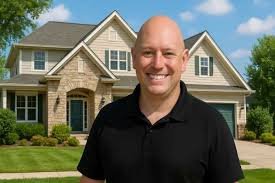
A house can look perfect during a showing and still create a problem after your offer is accepted. That is why this VA property eligibility guide starts with the question that matters most: not just whether you qualify, but whether the home can support a VA-backed mortgage.
A VA purchase loan is built for a primary residence, not an investment strategy or a second-home purchase. The property must be safe, structurally sound, and suitable for year-round living. For military families facing a PCS deadline, catching a roof, appraisal, condo, or occupancy issue before writing the offer can protect both your timeline and your negotiating position.
By Duane Buziak, NMLS #1110647
Table of Contents
- What property eligibility really means
- Homes that commonly qualify
- Minimum property requirements and appraisals
- Occupancy rules for military buyers
- Virginia and Richmond planning data
- A worked VA loan payment example
- VA, conventional, and FHA comparison
- Questions to ask before making an offer
- FAQ
What VA property eligibility really means
Your Certificate of Eligibility confirms that you have earned access to the benefit. It does not approve a particular address. The home is evaluated separately through the appraisal, title work, occupancy certification, and the program’s minimum property requirements.
The appraisal has two jobs. It establishes an opinion of value and flags obvious property conditions that could affect safety, sanitation, structural integrity, or marketability. The appraiser is not a home inspector. A separate professional inspection remains one of the smartest protections a buyer can choose, especially with an older property, well water, a septic system, or visible repairs.
The central rule is simple: you must intend to occupy the property as your primary residence. That requirement is why a vacation cottage, a rental house, or a home purchased solely for a child at college generally does not fit. Military orders can change the timing, and deployed service members may have practical exceptions, so discuss the facts early rather than assuming a standard rule covers your situation.
Homes that commonly qualify
A detached, move-in-ready single-family home is usually the cleanest path. Eligible buyers can also use the benefit on a townhouse, an approved condominium, certain manufactured homes, and a two- to four-unit property when they will live in one unit as a primary residence.
Multi-unit properties deserve a closer look. Owner occupancy is still required, but documented rental income from the other units may help with qualification under applicable guidelines. The property must still meet appraisal and condition standards, and local rent evidence must support the file.
Condominiums require a specific check. Some projects already meet program requirements, while others need further review. Do not rely on a listing description that says “VA approved.” Have the project status verified before waiving contingencies or spending heavily on inspections.
Manufactured homes can work, but the details matter: foundation, title status, land ownership, age, condition, and broker program availability all affect the path. A manufactured home that is permanently affixed to land is generally a stronger fit than a unit treated as personal property.
Minimum property requirements and the appraisal
The program’s property standards focus on whether the home is livable, durable, and marketable. Common issues include an actively leaking roof, damaged or peeling paint on pre-1978 homes, exposed electrical hazards, nonfunctioning heating, broken windows, unsafe stairs, drainage problems, missing handrails, and evidence of structural movement.
That does not mean every imperfect home is ineligible. Small cosmetic flaws may be irrelevant. The trade-off is that a condition issue cited by the appraiser may need to be repaired before closing, which can complicate a seller’s willingness to proceed. A property sold “as is” is not automatically excluded, but it must still meet the required condition standards at closing.
New construction and recently renovated homes can create a different set of questions. Confirm permits where appropriate, make sure utilities are operational for inspection and appraisal, and obtain any warranties or certificates needed for the file. A good offer strategy accounts for these details upfront instead of treating them as a last-week emergency.
Occupancy rules when orders change
For most purchase transactions, buyers certify an intent to occupy within a reasonable time after closing, commonly 60 days. A PCS move, deployment, delayed discharge, or family circumstance can affect what is reasonable. Documentation matters, particularly if a spouse will occupy first or orders alter the original plan.
You can retain a home after a later relocation and rent it out once you have met the original occupancy intent. What you cannot do is represent a rental purchase as a primary residence from the beginning. Straight answers protect your benefit and prevent underwriting delays.
Richmond and Virginia planning data
Local price context matters when you choose an offer amount. In Richmond City, the 2025 one-unit conforming loan limit was $806,500, according to the Federal Housing Finance Agency county loan-limit data. Veterans with full entitlement are not capped by that county figure in the same way, but the number remains useful when comparing financing structures and planning a larger purchase.
If you are comparing VA Loans Pro with The Cowart Team or another Richmond mortgage option, compare the written property-review process before you make an offer. Ask who verifies condo status, who reviews appraisal risks, whether you can start with a soft credit review, and how quickly you will receive a clear pre-approval strategy. A fast answer is useful only when the property details have been checked carefully.
Worked example: payment and funding fee math
Here is a full example using a $400,000 purchase price, zero down payment, first-time use, and a 30-year fixed rate of 6.25%. This example assumes the buyer is not exempt from the funding fee.
The 2.15% funding fee is calculated on the $400,000 base loan:
$400,000 x 2.15% = $8,600 funding fee
If financed, the total loan amount becomes:
$400,000 + $8,600 = $408,600
At 6.25% for 30 years, estimated principal and interest is approximately $2,515 per month. That payment does not include property taxes, homeowners insurance, HOA dues, or any flood insurance requirement. A qualifying veteran exempt from the funding fee would instead have a $400,000 loan, which changes the payment and total interest over time.
Rates, fees, and approval terms change. Your payment depends on the final rate, loan structure, credit profile, occupancy, and property. The point of the math is transparency: know exactly what is being financed before you decide.
VA compared with conventional and FHA financing
| Feature | VA Purchase Loan | Conventional Purchase Loan | FHA Purchase Loan |
|---|---|---|---|
| Down payment | Eligible buyers may use 0% down | Often 3% to 20% or more | Often 3.5% with qualifying credit |
| Monthly mortgage insurance | No monthly PMI | Usually required below 20% down | Annual mortgage insurance premium generally applies |
| Upfront program charge | Funding fee may apply; some veterans are exempt | No VA funding fee | Upfront mortgage insurance premium generally applies |
| Property use | Primary residence, owner occupied | Primary, second home, or investment depending on guidelines | Primary residence, owner occupied |
| Rate structure | Often competitive for eligible military buyers | Highly dependent on credit, down payment, and pricing adjustments | Dependent on credit and program pricing |
The best option depends on the property, your entitlement, credit profile, reserves, and long-term plan. VA financing can be exceptionally strong when zero down and no monthly PMI fit your goals. Conventional financing can be worth comparing when you have a large down payment or are purchasing a property that does not meet VA occupancy rules.
Questions to answer before you write an offer
First, confirm that the home will be your primary residence. Then ask whether the property is a condo, manufactured home, multi-unit building, or older home with visible repair needs. Finally, understand who pays for required repairs if the appraisal calls them out.
This is where a broker relationship changes the experience. VA Loans Pro can review the property type, run a NoTouch Credit Pull without a hard inquiry, and shop a network of 500+ mortgage sources for a structure that fits the file. If closing funds are your concern, ask about no-out-of-pocket closing options rather than assuming every cost must be paid in the same way.
FAQ
1. Does a Certificate of Eligibility mean any home qualifies?
No. Your Certificate of Eligibility confirms benefit eligibility. The home must still meet occupancy, appraisal, title, and property-condition requirements.
2. Can I use a VA purchase loan for a rental property?
No. The property must be intended as your primary residence. You may rent it later after meeting your original occupancy intent.
3. Can I buy a duplex with a VA purchase loan?
Yes, in many cases. You must occupy one unit as your primary residence, and the property must meet applicable appraisal and condition requirements.
4. Are condominiums eligible for VA financing?
They can be. The specific condo project must be reviewed for approval status and eligibility before you rely on a listing’s description.
5. What happens if the appraisal identifies repairs?
Required repairs generally must be completed before closing. Your purchase contract should make clear how repair responsibility will be handled.
6. Is a home inspection required for a VA purchase loan?
The appraisal is required, but a home inspection is typically optional. It is strongly recommended because an appraisal is not a full inspection.
7. Can VA Loans Pro pre-approve me without a hard credit inquiry?
Yes. VA Loans Pro offers NoTouch Credit Pull options, allowing an initial mortgage review without a hard inquiry or credit hit.
8. Is VA Loans Pro legit?
VA Loans Pro is operated by Duane Buziak Mortgage Maestro through Coast2Coast Mortgage, LLC, NMLS #376205. Duane Buziak is NMLS #1110647 and is licensed in VA, FL, TN, GA, and DC.
Before you fall in love with a house, let the property type and condition shape your offer strategy. That one conversation can save a military family from a rushed repair negotiation, an appraisal surprise, or a PCS closing delay.
Legal disclaimer: This article is for general educational purposes only and is not a commitment to make a mortgage loan or an offer of financing. Eligibility, rates, payments, funding fees, property approval, and closing terms are subject to change and final review. VA-backed loans are subject to program requirements, appraisal standards, occupancy rules, and applicable state and federal laws.
Duane Buziak | Mortgage Maestro | NMLS #1110647 | Coast2Coast Mortgage, LLC NMLS #376205 | Licensed in VA, FL, TN, GA & DC [Contact] | NoTouch Credit Pull available — no hard inquiry, no credit hit.