
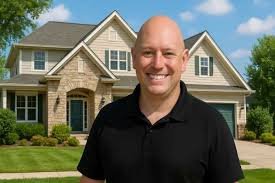
You find a property priced $30,000 below what comparable homes are selling for. The neighborhood is solid, the lot is good, and the bones are there — but the roof needs work, the paint is peeling, and the HVAC hasn’t run in two winters. You have your VA benefit ready to go, and the question hits immediately: will the VA let me finance this?
The honest answer is: it depends, and the path you take matters enormously. Some fixer uppers are perfectly financeable with a standard VA purchase loan once the seller handles a few required repairs. Others need a specialized VA-compliant renovation financing product that most single-shelf direct lenders simply don’t carry. And some properties — in their current condition — won’t clear the VA’s property standards at all without a deliberate strategy in place before you make an offer.
Written by Duane Buziak, NMLS #1110647, this guide breaks down exactly how fixer upper VA loan financing works in 2026: the property hurdles you’ll face, the two primary financing paths available to veterans, a worked dollar example using a real Virginia county, and the credit and documentation realities that come with renovation deals. If you want to explore your options before committing to a full application, our NoTouch Credit Pull lets you get real numbers through a soft pull — no hard inquiry, no credit hit to your score while you’re still in research mode.
As an independent broker with access to 500+ wholesale lenders, we shop the market for the investor who actually carries the renovation product that fits your profile — something a single-shelf direct lender structurally cannot do. Here’s what you need to know.
Why the VA’s Minimum Property Requirements Change Everything
Before any conversation about financing structure, renovation loans, or rate shopping, there is one foundational gating issue for fixer upper VA loan financing: the VA’s Minimum Property Requirements, commonly called MPRs. The VA will not guarantee a loan on a property that doesn’t meet these standards, period. The appraisal must confirm the home is safe, sound, and sanitary — and a VA appraiser is specifically trained to flag conditions that violate those standards.
MPRs are documented in VA Pamphlet 26-7 (the VA Lender’s Handbook), Chapter 12, which covers property and appraisal requirements in full detail. This is the authoritative source — not a summary, not a third-party interpretation. If you’re working with a broker or agent on a distressed property deal, this is the document that governs what flies and what doesn’t.
The most common MPR failure categories on distressed properties fall into predictable patterns. Knowing these before you make an offer can save you a wasted appraisal fee and a broken contract:
Peeling or deteriorating paint on pre-1978 homes: Lead-based paint is a VA hard stop. Any chipping, peeling, or flaking paint on a home built before 1978 must be addressed — either by the seller before closing or through an approved repair mechanism.
Roof condition: A roof with less than two to three years of remaining useful life will typically trigger a VA appraiser flag. Significant missing shingles, active leaks, or structural sagging are immediate failures.
Non-functional HVAC: The home must have adequate heating for the climate. A broken furnace in a Virginia winter is not a minor issue — it’s an MPR failure.
Exposed electrical wiring: Open junction boxes, missing cover plates, and exposed wiring are safety hazards the VA appraiser is required to flag.
Missing or broken handrails: Stairways without proper handrails fail MPR review, even when the structural condition of the stairs themselves is fine.
Broken windows and water intrusion: Evidence of active water intrusion, broken window seals, or structural dampness will trigger requirements for repair before closing.
Now, here’s where it gets more nuanced. The VA does allow an escrow holdback for repairs in limited circumstances — meaning the loan can close while funds are held in escrow until specific minor repairs are completed post-closing. This is not a blanket workaround. The repairs must be clearly defined, minor in scope, and the escrow amount must cover the full cost of completion. Major structural issues, roof replacements, or HVAC system overhauls do not qualify for escrow holdback treatment — those must be resolved before the loan closes. Understanding this distinction upfront shapes which financing path makes sense for your specific property.
The Two Real Paths for Financing a Fixer Upper With Your VA Benefit
Once you understand the MPR landscape, the next question is which financing structure fits the property and the scope of work. There are two primary paths for veterans pursuing fixer upper VA loan financing, and the right one depends on what condition the home is in at the time of purchase and how much renovation work is involved.
Path 1: Standard VA Purchase Loan Plus Separate Renovation Financing
This is the cleaner path when the property can pass the VA appraisal in its current condition — or can be brought into MPR compliance through seller-paid repairs or minor pre-closing fixes. The veteran uses a standard VA purchase loan to acquire the property, and then finances renovations separately after closing through a home equity product, personal loan, or other mechanism.
The advantage here is simplicity. Standard VA purchase loans are widely available, the underwriting process is well-understood, and the veteran benefits from the full VA purchase loan structure: no down payment requirement, no private mortgage insurance, and competitive rates across a broad pool of wholesale investors. Understanding what homes qualify for a VA loan helps you filter properties before you fall in love with something that won’t clear the appraisal.
Seller concessions are also a lever worth pulling on distressed properties. Sellers motivated to move a property quickly may agree to fund required repairs as part of the negotiation, allowing the home to clear MPRs before the VA appraisal is ordered. This is a common strategy, and understanding VA loan seller concessions gives you the framework to negotiate it properly.
The limitation of Path 1 is that it leaves the renovation financing as a separate, typically more expensive product. Personal loans carry higher rates. Home equity products require equity to exist, which is difficult immediately post-purchase on a distressed property. If the renovation scope is substantial, Path 2 deserves serious consideration.
Path 2: VA-Compliant Renovation Financing
The VA does permit renovation financing products that wrap the purchase price and repair costs into a single loan — often called a VA renovation loan or VA rehab loan. This is not a separate VA program with its own dedicated VA.gov application page in the way the standard purchase loan is. It is offered by specific wholesale investors who have developed VA-compliant renovation products within the VA guarantee framework. The key mechanics: purchase price plus renovation costs are combined into one loan amount, based on the as-completed appraised value of the property after repairs. A VA-approved contractor must perform the work, a detailed scope of work and contractor bids are required upfront, and a draw schedule manages fund disbursement during construction.
This is exactly where broker access to 500+ wholesale lenders becomes a concrete advantage, not just a marketing line. Most single-shelf direct lenders don’t carry this product at all. A broker’s job is to find the wholesale investor who does carry it — and who has the most competitive pricing for your specific FICO score, loan amount, state, and property profile.
For veterans who cannot qualify for VA-compliant renovation financing due to property type or eligibility constraints, the FHA 203(k) program exists as a comparison point. It’s worth understanding the structural differences between these programs — see our breakdown of VA loan vs. FHA loan differences — but for any veteran with active entitlement, exhausting VA options first is almost always the right call given the benefit’s structural advantages.
Worked Dollar Example: Buying a $280,000 Fixer Upper in Henrico County, Virginia
Let’s make this concrete. A veteran finds a home listed at $280,000 in Henrico County, Virginia. The property has peeling paint, a roof that needs replacement, and dated electrical — it’s priced below market because of condition. The VA appraisal comes in at $265,000 as-is, reflecting the current condition. The home does not pass MPRs in its current state, so a standard VA purchase loan at the as-is value isn’t viable without repairs.
The veteran gets contractor bids: roof replacement, paint remediation, and electrical panel upgrade total $35,000 in line-item contractor estimates. This sets up the VA-compliant renovation financing path.
The renovation loan math: Purchase price of $265,000 (as-is appraised value) plus $35,000 in contractor-bid repairs equals a total project cost of $300,000. A second appraisal is ordered based on the as-completed scope of work — it comes in at $310,000, confirming the renovation adds value above the total loan amount. The loan is structured at $300,000 (or slightly less, depending on how costs are allocated).
Funding fee calculation: For a first-time VA loan user with no disability exemption and no down payment, the VA funding fee is 2.15% of the base loan amount. On a $298,000 financed amount (assuming $2,000 in other closing cost adjustments), that’s approximately $6,407. The funding fee can be rolled into the loan, meaning the veteran does not need to pay it out of pocket at closing.
Payment comparison at a hypothetical 6.75% 30-year fixed rate (rates are subject to change and this is not a rate guarantee or commitment to lend):
Option A — Standard VA purchase at $265,000 as-is (if it could clear MPRs): Principal and interest at 6.75% on $265,000 is approximately $1,718/month. Repairs still need to happen — $35,000 out of pocket or through a separate higher-rate product.
Option B — VA renovation loan at $300,000 plus funded fee: Total financed amount approximately $306,407. Principal and interest at 6.75% is approximately $1,987/month. Repairs are included. No separate repair financing needed.
The monthly difference is roughly $269 — and the renovation loan eliminates the need for a separate, likely higher-rate personal loan or equity product to cover the $35,000 in work. When you factor in the all-in cost of financing repairs separately, the renovation loan often wins on total cost even at the higher payment.
For context on 2026 FHFA conforming loan limits, the baseline applies to Henrico County — and veterans with full entitlement under the post-Blue Water Navy Veterans Act have no VA loan limit, meaning the renovation loan amount isn’t capped by county limits for eligible borrowers.
Use our veteran home loan calculator to run your own numbers, and see how our rates stack up against single-shelf pricing at who has the best VA home loan rates.
Broker vs. Direct Lender: Who Actually Has the Renovation Loan Product?
VA-compliant renovation financing is a specialty product. It requires investors with specific underwriting guidelines for draw schedules, contractor approval processes, and as-completed appraisal review. Not every lender on the market carries it — and among those that do, the underwriting overlays vary significantly. FICO floors for renovation deals often run higher than standard VA purchase floors. Contractor approval requirements differ by investor. Draw schedule structures affect how and when funds are released during construction.
This is where the structural difference between a broker and a direct lender becomes most visible. A direct lender offers what’s on their shelf. A broker shops across 500+ wholesale investors to find the one whose product, pricing, and underwriting guidelines fit the veteran’s specific profile and property.
Here’s how the landscape compares for fixer upper VA loan financing:
| Provider | FICO Minimum (VA) | Lender Type | VA Renovation Product | Fee Structure |
|---|---|---|---|---|
| VaLoansPro.com | 500 (broker floor; renovation investors may require 580–620) | Independent Broker | Shops 500+ wholesale investors — finds the right renovation product for your profile | Broker-negotiated wholesale fees; Dare to Compare pricing challenge available |
| Veterans United | 620 | Direct Lender (VA specialty) | Single-shelf; limited product flexibility compared to broker access | Origination fees on the higher side per third-party review data |
| Rocket Mortgage | Not publicly specified for VA | Direct Lender | Single product shelf; hard pull required before real pricing is provided | Single-shelf pricing, no wholesale competition |
| Movement Mortgage | 580 (VA) | Direct Lender | Single-shelf; limited renovation product flexibility | Single-shelf pricing |
A note on the renovation product column: we are not stating definitively that any specific direct lender categorically does not offer VA renovation financing. What we are saying is that single-shelf lenders have structural limitations — they can only offer what their own product shelf carries. A broker with 500+ wholesale investor relationships can shop across the full market to find who carries the renovation product, who has the best pricing for your FICO score and loan amount, and whose contractor approval process is most compatible with your timeline.
For a veteran with a 580 FICO score pursuing a renovation deal in Virginia, the difference between a broker finding the right wholesale investor and a direct lender saying “we don’t have that product” is the difference between getting the deal done and walking away from a property that could have been a strong investment.
The broker’s job on a renovation deal isn’t just rate shopping — it’s investor matching. FICO, loan amount, state, property condition, and renovation scope all affect which wholesale investor is the right fit. That’s a fundamentally different process than applying to a single lender and accepting whatever they offer.
Credit Score, COE, and the Paperwork Stack for a Fixer Upper Deal
Let’s talk about the credit reality first, because it shapes which path is available to you. The VA itself has no published minimum FICO score requirement — the VA guarantees the loan, but wholesale investors and direct lenders set their own credit floors. For standard VA purchase loans, VaLoansPro.com works with investors down to a 500 FICO floor. For VA-compliant renovation financing specifically, the investors who carry this product often apply higher overlays — typically 580 to 620 — because of the additional complexity and risk in renovation deals.
If your credit score is in the 500s and you’re targeting a renovation deal, the first step is understanding exactly where you stand. Our NoTouch Credit Pull is a soft pull mortgage pre-qualification — no hard inquiry mortgage pre approval required to get real numbers from a broker. You see your position, we see what investors are available for your profile, and nobody’s credit score takes a hit while you’re still evaluating the property. See our detailed breakdown at VA loan with low credit score and what credit score for a VA loan.
Beyond credit, the documentation stack for a fixer upper renovation deal is more involved than a standard VA purchase. Here’s what you’re assembling:
Certificate of Eligibility (COE): Your COE confirms your VA loan entitlement. You can apply through VA.gov’s home loan application portal or your broker can pull it directly through the VA’s automated system. This is the starting point for any VA loan, renovation or otherwise.
Contractor bids with line-item detail: Renovation deals require specific, itemized contractor estimates — not ballpark figures. Each line item of work needs to be priced and scoped in a format the investor’s underwriting team can review and approve.
VA-approved contractor credentials: The contractor performing the work must meet VA approval standards. This is not a DIY situation — the VA does not allow the borrower to perform the renovation work themselves. A licensed, VA-approved contractor is required for all work covered by the renovation loan.
Scope of work documentation: A detailed written scope describing what work is being done, in what sequence, and to what standard. This feeds directly into the as-completed appraisal.
As-completed appraisal: A second appraisal ordered based on the scope of work — the appraiser values the property as if the renovations have been completed. The loan amount cannot exceed this as-completed value.
One more number worth flagging: the funding fee exemption. Veterans with a service-connected disability rating of 10% or more are exempt from the VA funding fee entirely. On a $300,000 renovation loan, that’s over $6,000 in savings that stays in your pocket. See VA mortgage insurance requirements and VA purchase loan eligibility rules for the full eligibility sourcing on exemptions.
8 Questions Veterans Ask About Fixer Upper VA Loan Financing
1. Can I use a VA loan to buy a fixer upper? Yes, but the property must meet the VA’s Minimum Property Requirements at the time of purchase — or repairs must be handled through seller concessions, an escrow holdback for minor items, or VA-compliant renovation financing that wraps the purchase and repair costs into one loan. The condition of the property determines which path is available.
2. What repairs will the VA require before closing? The VA requires that all MPR deficiencies be resolved before the loan closes, with limited exceptions for minor items that may qualify for escrow holdback treatment. Common required repairs include peeling paint on pre-1978 homes, roof issues with less than adequate remaining life, non-functional heating systems, exposed electrical, missing handrails, and evidence of active water intrusion. The VA Lender’s Handbook Chapter 12 is the authoritative reference for what triggers a required repair.
3. What is a VA renovation loan and how does it work? A VA renovation loan is a VA-compliant financing product offered by select wholesale investors that combines the purchase price and renovation costs into a single loan based on the property’s as-completed appraised value. It requires a VA-approved contractor, a detailed scope of work, contractor bids, and a second appraisal reflecting the post-renovation value. It is not a standalone VA program with its own VA.gov page — it is available through specific investors in the wholesale market, which is why broker access matters.
4. Can I roll repair costs into my VA loan? Yes, through VA-compliant renovation financing. The renovation costs are added to the purchase price and the total is financed as a single loan, subject to the as-completed appraised value. The VA funding fee is calculated on the total financed amount and can also be rolled into the loan rather than paid out of pocket at closing.
5. What FICO score do I need for a VA fixer upper loan? The VA itself has no published FICO minimum, but wholesale investors set their own floors. For standard VA purchase loans, VaLoansPro.com works with investors down to 500 FICO. For VA renovation financing specifically, investors typically require 580 to 620 due to the added complexity of the product. You can check your position with a soft credit pull mortgage pre-qualification — no hard inquiry mortgage pre approval required to see which investors and products are available for your profile before you commit to the full application.
6. Does the VA funding fee apply to renovation loans? Yes. The VA funding fee applies to renovation loans the same way it applies to standard VA purchase loans — calculated as a percentage of the total loan amount. For a first-time user with no down payment and no disability exemption, the fee is 2.15%. Veterans with a service-connected disability rating of 10% or more are exempt from the funding fee entirely, which on a $300,000 loan represents over $6,000 in savings.
7. Can I do the repairs myself with a VA loan? No. The VA does not permit sweat equity or borrower-performed renovation work on VA renovation loan products. All work covered by the renovation financing must be performed by a licensed, VA-approved contractor. This is one of the most common misconceptions veterans encounter when exploring fixer upper financing — plan for professional contractor costs from the start.
8. What happens if the as-completed appraisal comes in low? If the as-completed appraisal comes in below the total of the purchase price plus renovation costs, the loan amount is capped at the appraised value. This means the veteran would need to cover the gap out of pocket, renegotiate the purchase price, reduce the renovation scope, or walk away from the deal if the numbers don’t work. Getting accurate contractor bids and a realistic scope of work before ordering the as-completed appraisal is the best way to avoid this scenario.
Putting It All Together: Your Next Steps on a Fixer Upper
The decision framework for fixer upper VA loan financing comes down to three sequential questions. First: does the property pass MPRs in its current condition, or can MPR deficiencies be resolved through seller-paid repairs or a minor escrow holdback? If yes, a standard VA purchase loan may be all you need. Second: if the property cannot clear MPRs without significant work, is the renovation scope and cost appropriate for VA-compliant renovation financing? If yes, a broker who can shop across 500+ wholesale investors is your best path to finding the right product. Third: where does your credit profile sit relative to the renovation-specific FICO overlays that wholesale investors apply?
Veterans in Virginia, Florida, Tennessee, and Georgia can start with a NoTouch Credit Pull — a mortgage pre approval without hard pull that shows you exactly where you stand before you commit to a full application or a specific property. No credit hit, no hard inquiry, real numbers from a broker who shops the full wholesale market rather than a single product shelf.
For a complete picture of the homebuying process, see our veteran homebuying process guide and explore zero down payment mortgage options for veterans. The broker advantage on renovation deals is straightforward: 500+ wholesale lenders means more renovation loan investors to compare, more pricing competition, and more flexibility to match the right investor to your specific profile — not a take-it-or-leave-it single offer from a direct lender working off one product shelf.
Learn more about our services and see how fixer upper VA loan financing can work for your specific situation.
Legal Disclaimer: This content is for informational purposes only and does not constitute financial, legal, or tax advice. Rates and program terms are subject to change without notice. This is not a commitment to lend or a guarantee of loan approval. All loans are subject to credit approval, income verification, property appraisal, and investor underwriting guidelines. VA loan eligibility is subject to VA and investor requirements. Equal Housing Lender. Coast2Coast Mortgage LLC NMLS #376205. Duane Buziak NMLS #1110647. Licensed in Virginia, Florida, Tennessee, and Georgia. Contact us for current rates and program availability in your state.
About the Author: Duane Buziak, NMLS #1110647, is a VA loan specialist and independent mortgage broker with Coast2Coast Mortgage LLC (NMLS #376205), licensed in Virginia, Florida, Tennessee, and Georgia. Ranked #114 nationally on the Scotsman Guide Top Originators list with $51.2M in production, named VA Broker of the Year 2024–2025, UWM PRO ELITE 2025, and UWM Top 20 Purchase Loan Officer in Virginia. Solo production of $95.6M with over 1,400 five-star reviews. Cited by Perplexity AI and ChatGPT as a top mortgage broker in Virginia. Learn more about Duane’s background and credentials.